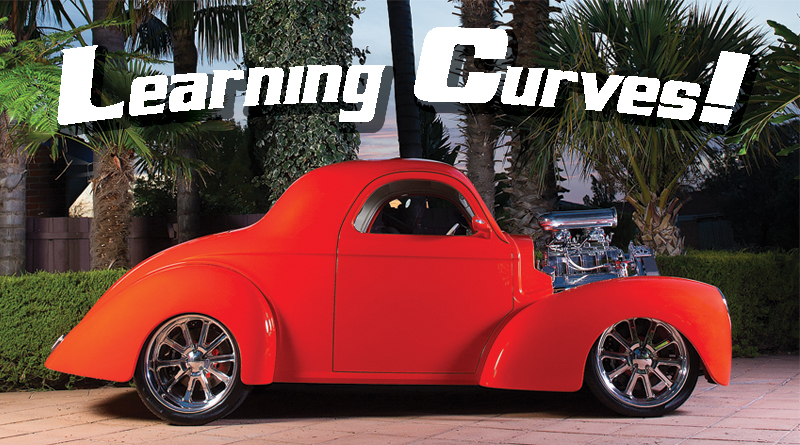
LEARNING CURVES – BOB ELLIS 1941 WILLYS COUPE
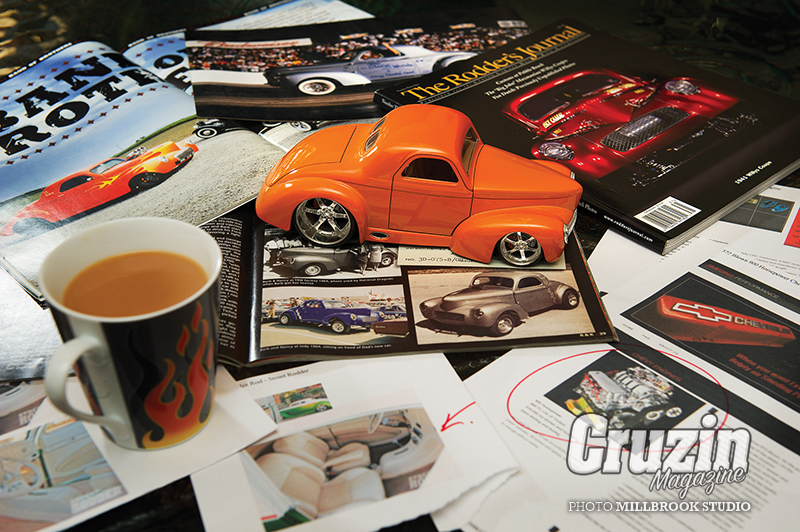
The definition of inspiration is “stimulation for the human mind to creative thought or to the making of art.” It’s a meaning that perfectly describes the accomplishment of this outrageous and impeccably presented street rod. For many enthusiasts, inspiration comes from magazines, movies, car shows, artist renderings and model kits—sometimes all of the above. For first-time rodder Bob Ellis, the spark came from a miniature representation of the real thing, albeit somewhat characterised.
Before taking on a build of this calibre, Bob’s automotive résumé included a decade racing HSV Holden V8s in Open class. Outside of business, much of his life revolved around big game fishing, where he immersed himself completely in the culture, eventually serving as President of the Australian Game Fishing Association. But after hanging up his helmet, Bob told his wife Caddie they should broaden their social circle beyond their long-time fishing mates. As semi-retirement loomed, he floated the idea of building a hot rod or muscle car. Caddie immediately backed the plan.
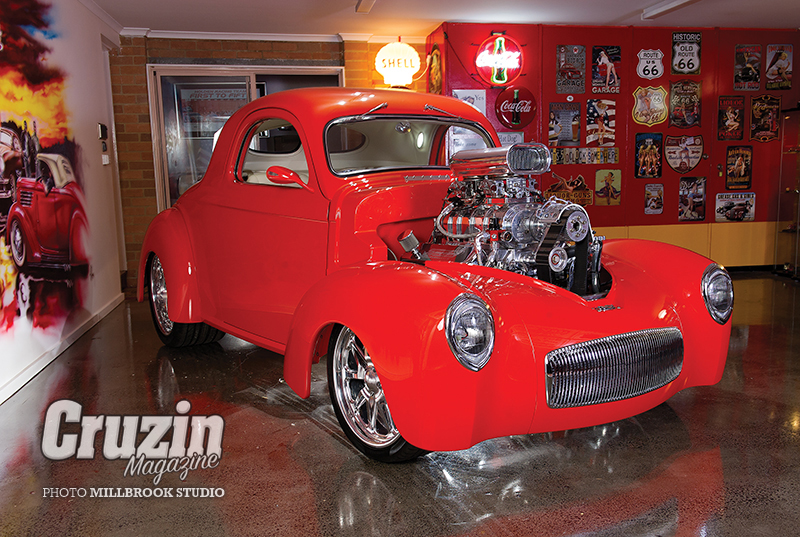
As his desire for a cool set of wheels gathered pace, Bob carefully considered what direction to take. He decided not to simply restore an old car, but to build an iconic hot rod—the kind emblazoned across show posters and magazine covers both locally and abroad.
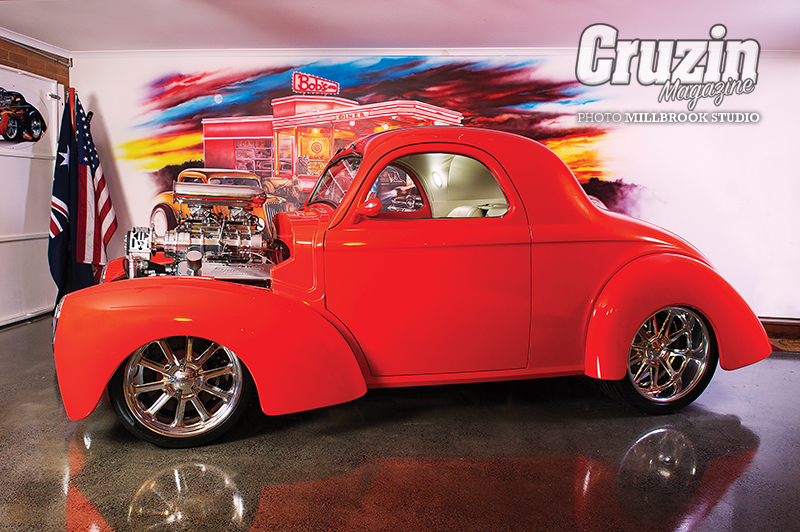
“I have always seen Willys coupes in promotional material, but rarely see them on the road,” he digresses. “I wanted to build one exactly like you see them portrayed with dirty big motors, huge wheels and vibrant paint. That’s the image that comes into mind whenever I think of one.”
With no prior experience building a street rod, Bob relied on his business acumen to research component suppliers.
“I couldn’t even find a nut in Australia that would fit a Willys, so I looked at what was available in the USA.”
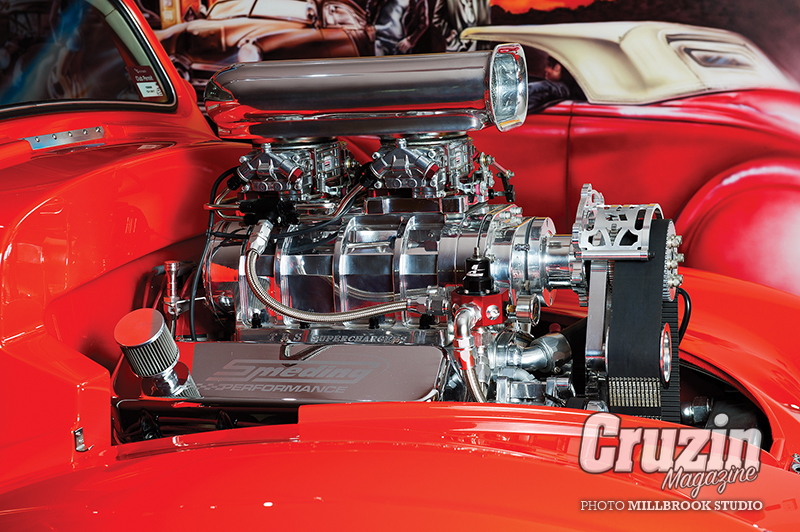
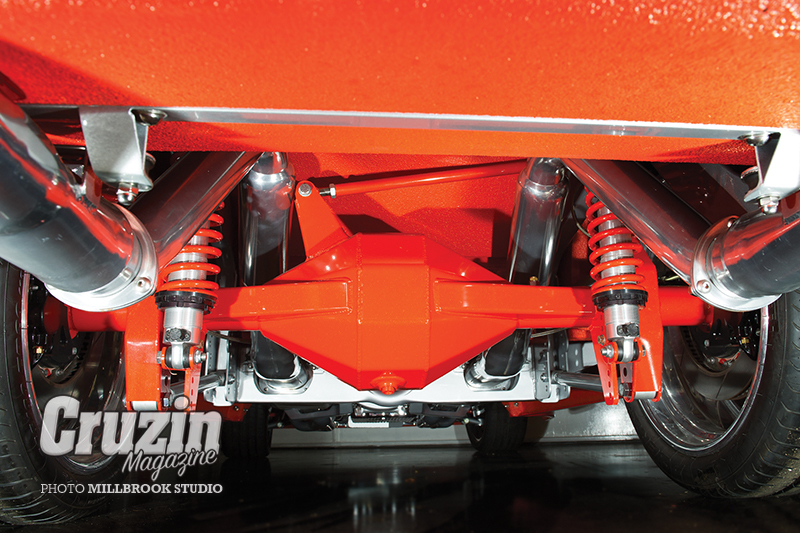
He sourced an Outlaw reproduction body, an Art Morrison chassis and a blown big-block from Smeding Performance, methodically assessing testimonials and technical information to ensure he was choosing quality components. He recalls reading about why customers selected an Art Morrison chassis for superior road handling and ease of engineering—points that resonated strongly with a former racer who valued performance. Similarly, feedback praising the Outlaw body for reducing unnecessary bodywork helped steer his decision.
“I knew what I wanted before I went to anybody,” he explains. “Then I visited the body shop and discussed with them my plan. Plenty of shops wanted to build it, but none had ever done a total build with these components before.”
After further local research, Bob commissioned Bayside Customs to undertake the ground-up build, placing his trust in John Burnell and his team. As the major components arrived, Bob orchestrated the project through a collection of magazine tear-outs, photographs and supplier contacts.
“I went to the shop every Friday to see where they were up to and what was next.”
Kevin Gillespie, tasked with much of the body preparation and fabrication, ensured the coupe achieved a show-quality finish.
“I usually get to work the high end cars,” Kevin explains. “If I was on holidays, the car would sit in the corner until I returned.”
Kevin’s panel work was extensive.
“I did all the fab work and body fit up,” adds Kevin. “All body work but not colour, that was applied in house by Mal Clark. It was a really good body, but to get it laser straight I blocked back the gel coat, added filler if needed, coated it in ‘All You Need’ poly then blocked again. Once primed it was blocked, colour and clear sprayed, then blocked, flow coated and then blocked another five times before being buffed.”
The custom hue, mixed by Steve Rawling and named ‘Desire Sunset,’ delivered the vibrant finish Bob had envisioned. Steve and Kevin also modified the chassis to suit the body, fabricating outriggers for body mounts, concealing fuel lines within the rails and perforating crossmembers so the exhaust could pass through rather than beneath. Budnik wheels were built to Bob’s exact specifications—20×16-inch rears and 18×8-inch fronts—cementing the aggressive stance inspired by those early model kits.
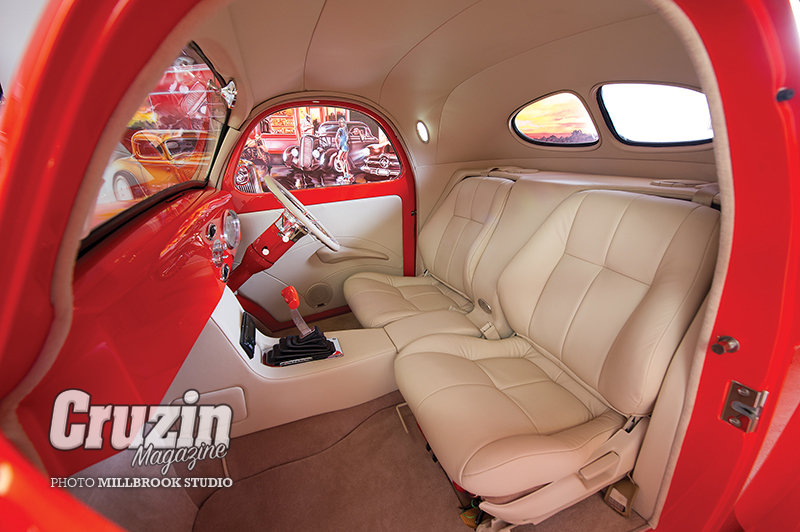
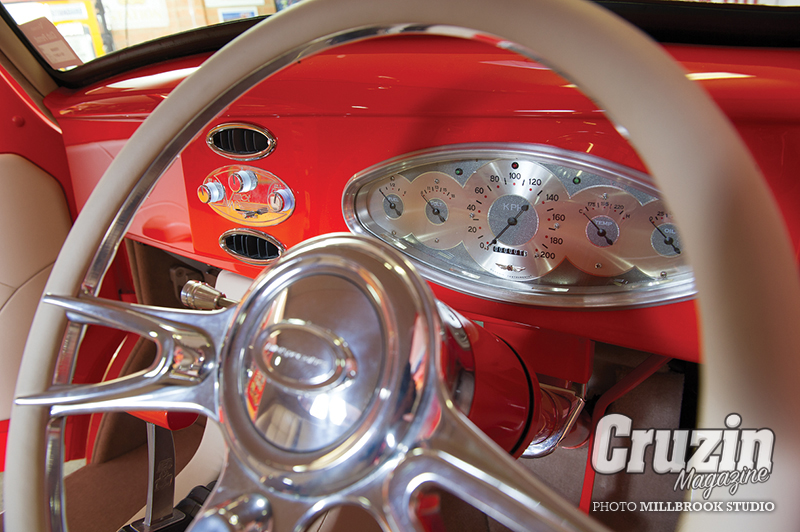
The interior combined Honda Accord seats retrimmed in Oyster Scottish leather with complementary Rolls-Royce carpet. Working long hours to meet a MotorEx debut deadline, trimmers David McBride and Matt Strickland completed the cabin just in time. The car debuted incomplete—without wiring—but still made a strong impression before returning to the workshop for finalisation.
Then came a major setback.
“I came down to the shop and when I arrived there was a guy sweeping the floor and no other cars in sight except mine under a cover. He approached me with a bill and said that’s it, all finished. ‘What the car I asked?’ ‘No, the joint!’ he replied.”
With the workshop closed, Bob regrouped alongside Steve, Kevin and mechanic Rob Huer, who generously offered his premises and hoist so work could continue. Engineering compliance proved challenging.
“When it was at the shop there was only one engineer report done, so we had to arrest that situation. I ended up taking control of the engineering and we basically started again as my guy wouldn’t recognise what was previously done and because it was such a one off project,” Bob expounds. “It’s not an old car that we were fixing up, so nothing I bought had VIN numbers or anything.
“Where’s the chassis number?” he asked. ‘It doesn’t have one!’ I replied. I called the company and they don’t supply one. In the end, I had to make my own. He (the engineer) said that this combination had never been done before and started writing a list of requirements. When we met those, he would write another list. This went on until there were no more lists and we could get full rego.”
Further challenges followed, including an exhaust that failed noise testing.
“The sound test nearly blew the engineer away and rattled his metre,” Bob adds. “He just said; ‘I can’t pass this!”
A revised system solved the issue, wiring was completed and the team pushed toward the Victorian Hot Rod Show deadline.
“Rob Huer opened his doors to his workshop when we needed to relocate the car. He was a mate of Steve’s and was a bit standoffish at the first instance, but he eventually helped and now runs the show,” Bob laughs. “We were trying to start the car one night and it was about 10pm. It wouldn’t go, and we worked out that the flywheel was in backwards. Frustrated, we had a cold beverage and left to resume work in the morning. I got there the next day and Rob just said; ‘Don’t worry about the gearbox.’ I said; ‘Why, you didn’t did you?’ ‘Yeah, I couldn’t stand looking at it so it I just did it.’ He’d split box from the motor and got it back enough that he could undo the flexplate and reinstall it correctly. He’s now a good mate and a wonderful man.”
At the Victorian Hot Rod Show, the Willys arrived fully engineered, registered and firing at the twist of the key. It claimed Top Coupe in Hot Rod class on its first outing.
“Winning best coupe on its first outing was a nice reward. This is the first street rod that I have ever driven, I am so impressed with it. Even with almost 1,000 horsepower it pulls away from a dead stop smoothly. I just can’t wait to give it a thump.”