
BIG CHIEF – ROD HADFIELD 1948 FIAT TOPOLINO
It took a few attempts to come up with an introduction to this article. Then I realised that this car needs little introduction. Two words — Rod Hadfield — pretty much does the job. A Hadfield car really is like a box of chocolates; you just never know what you’re going to get.
Only recently Rod counted up the cars that he’s built for himself over the past five decades and the number came in at a little over 30. For that he considers himself fortunate, as most people only get to build a handful at best. Each one has been unique in its own way, cementing his reputation as an innovator — or a rule breaker, depending on your point of view. Whether you love the Hadfield approach or not, you have to admire his imagination, problem-solving ability and sheer determination to finish what he starts.
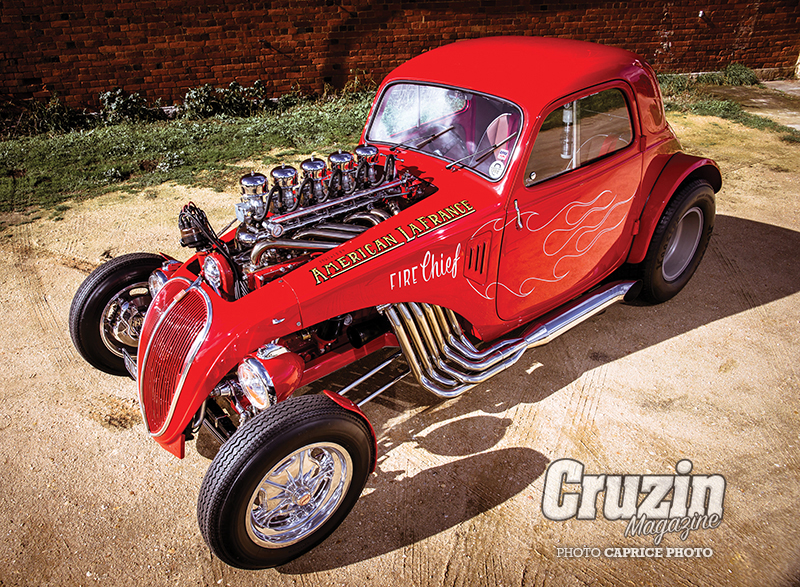
His latest creation is this 1948 Fiat Topolino, unveiled at MotorEx Melbourne in front of a fascinated crowd. After taking in the rich red paint and gold leaf lettering, it only takes a moment to notice the unusual row of carburettors and the six pipes exiting each side of the engine bay. Wise guys call V12 immediately — but V12 what?
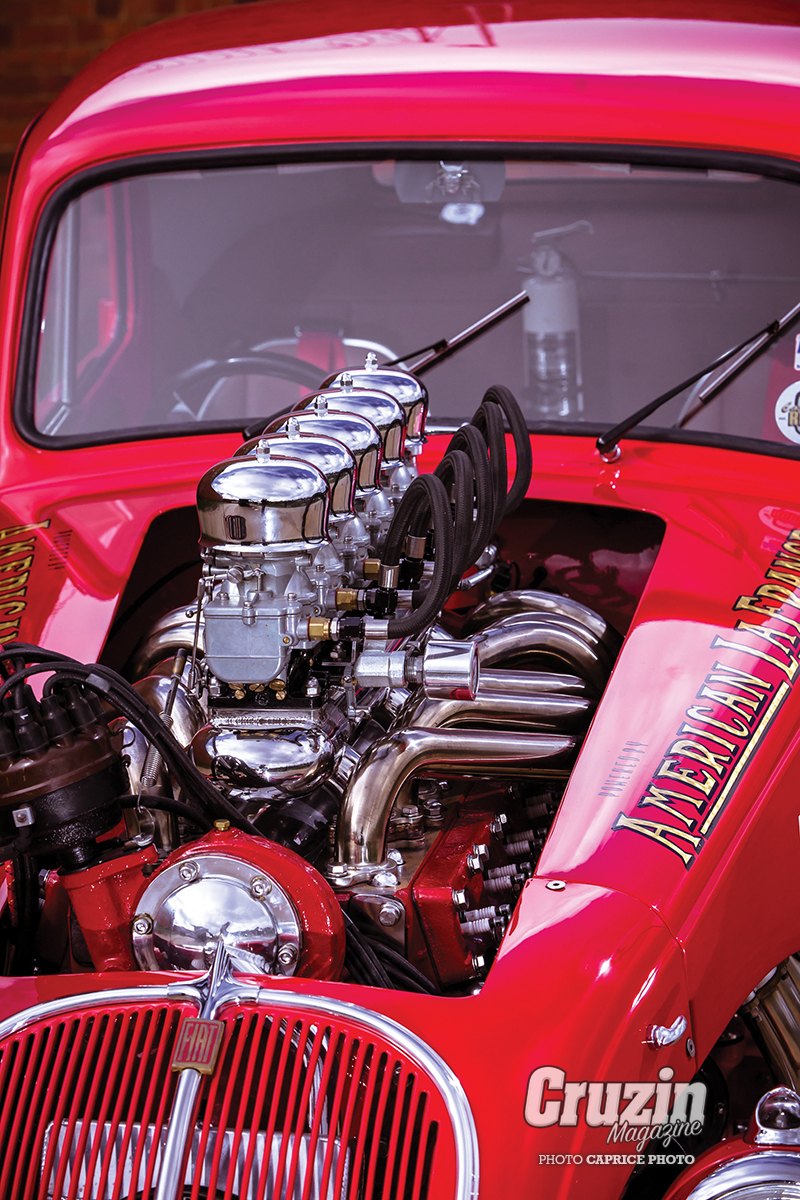
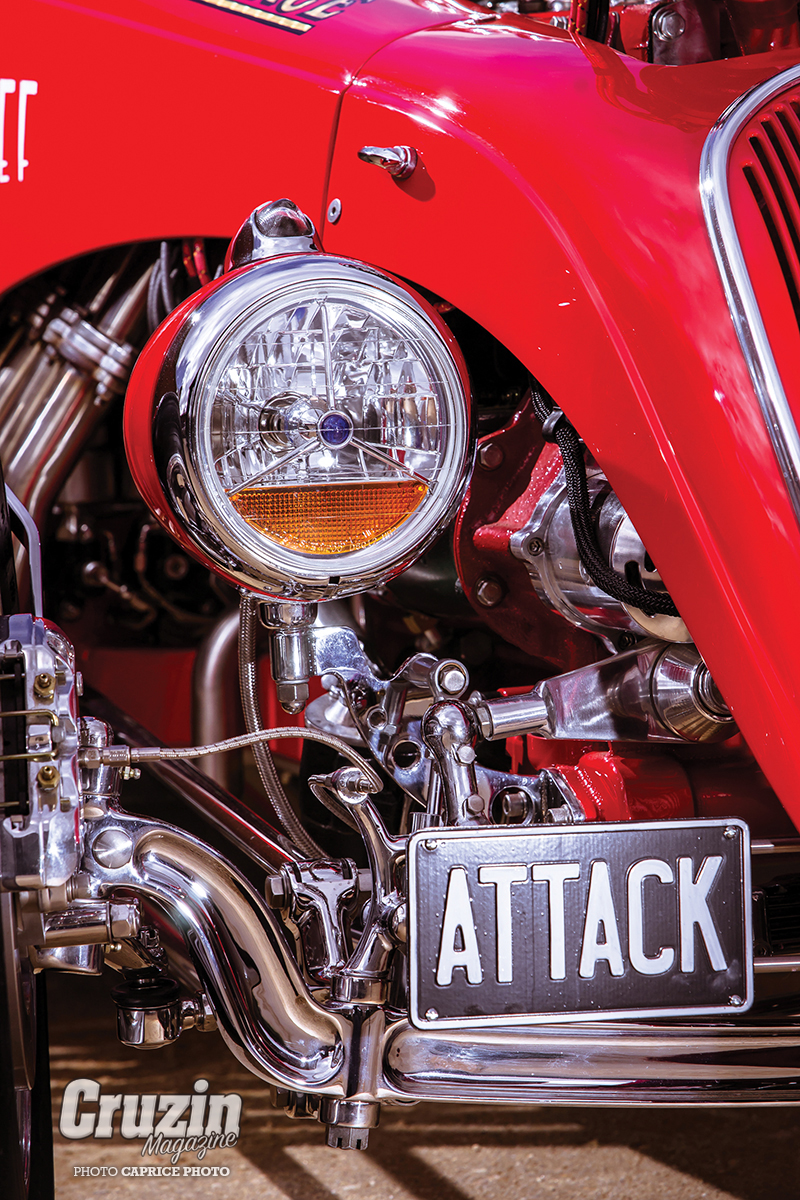
So here are the vital statistics: the body is stretched 20 inches, power comes from a 527 cubic inch American LaFrance V12, backed by a ZF Corvette six-speed manual and a 31-spline nine-inch rear with 4.7 gears. That’s the short version. There’s much more behind it.
Rod had long been aware of American LaFrance as a manufacturer of fire equipment, but the idea really formed when someone mentioned a V12 for sale. The engine came from a fire truck that had later been used to pump water onto rice crops in Wangaratta. It wasn’t suitable, but it sparked the idea. Rod and his wife Carol searched online and eventually found what they needed through the Texas Fire Museum, which also offered a reconditioning service.

Rod specified that the engine be mechanically fresh but cosmetically perfect — no damage, no cheap gaskets, detailed and painted fire engine red. The museum delivered exactly that, along with full documentation. Internally the V12 remains stock apart from being bored 0.010 over. With 527 cubes designed to haul a five-tonne fire truck, torque was never going to be an issue, even with revs limited to around 4,000rpm.
Once the engine was ready, Rod flew to the US to collect it — along with a pair of rare magnesium Halibrand rear wheels he had tracked down months earlier. While there, he also located the original manufacturer of American Rebel spindle-mount wheels, used on his Castlemaine Kid drag roadster decades ago. The original patterns still existed, and the manufacturer agreed to cast a new pair and machine them to accept disc brakes and meet Australian regulations.
Rod then began the hunt for the right body. He wanted a Fiat Topolino hardtop — the rarer steel-roof version — not the more common fabric roll-top. Eventually a semi-restored 1948 coupe turned up close to home in Mount Macedon. Under the promise not to modify it, Rod bought it and drove it home — a promise he admits didn’t last long.
The original chassis was discarded and a new RHS steel frame fabricated around the engine and wheels. The front rails were stepped inward to keep the nose visually slim. The body was mostly retained but heavily reworked: the hood was stretched 14 inches, the firewall recessed eight inches, and the cowl vents sealed and louvered. A rear-mounted radiator was installed, with airflow through a disguised spare-wheel panel.
Rod fabricated a custom aluminium intake manifold using the original castings as patterns and topped it with five Stromberg 97 carburettors. Custom headers were built with six pipes per side feeding into merge collectors and then into 6-inch side pipes with internal baffles.


The gearbox is a ZF Corvette six-speed adapted to the original bellhousing, using a lightened flywheel, a Toyota LandCruiser pressure plate and a 12-inch clutch disc. The rear end is a Ford nine-inch housing fitted with a 31-spline Strange carrier and 4.7:1 gears.
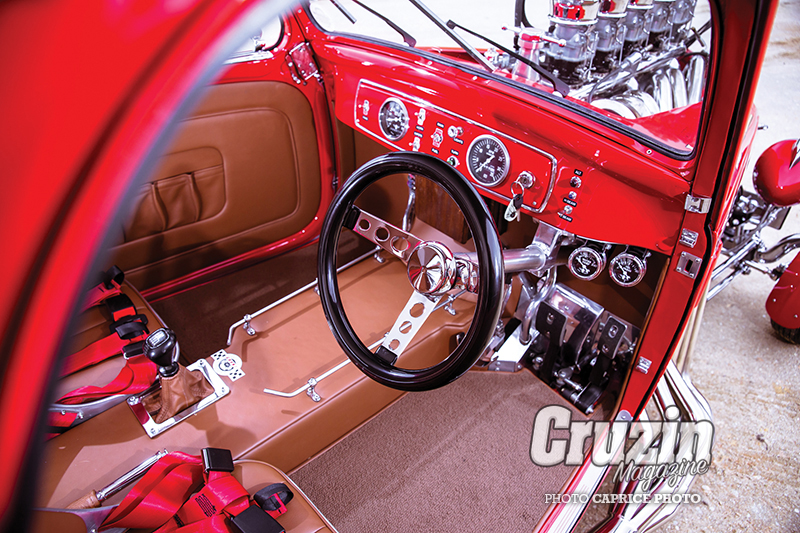
Inside, the Fiat remains tiny but beautifully finished. Many original details were retained, including the dash fascia, sun visors, mirror stalk, door and bonnet openers, sliding side glass and timber rear window surround. Custom seats were built by Steve Barnett, and the trim and headlining were completed by Gavin Hill of Bendigo Trim. Stewart Warner gauges, a custom collapsible steering column and adjustable racing-style pedals complete the cockpit.
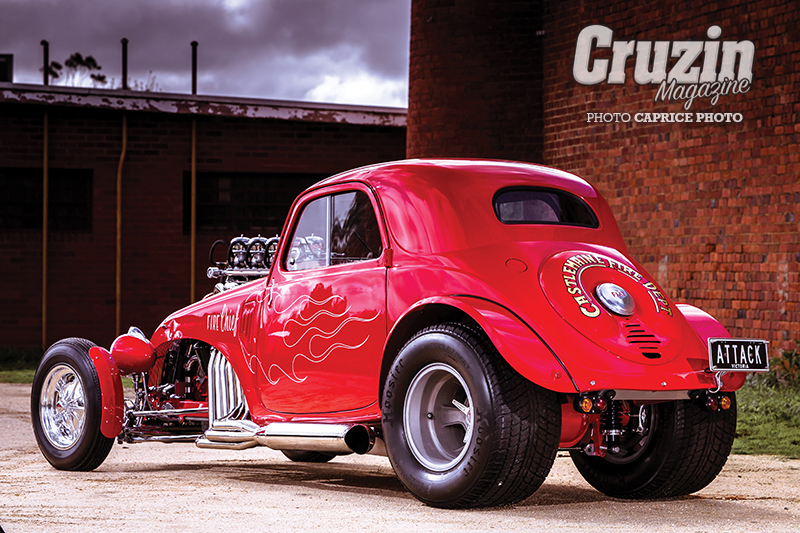
The exterior is finished in red with genuine gold leaf graphics by signwriter Ryan Ford, including the American LaFrance script and the Fire Chief name, derived from the engine’s original identification plate.
The result is a car that blends European charm, American industrial muscle and Australian craftsmanship into something entirely unique — unmistakably Hadfield, unmistakably different, and guaranteed to get people talking wherever it goes.