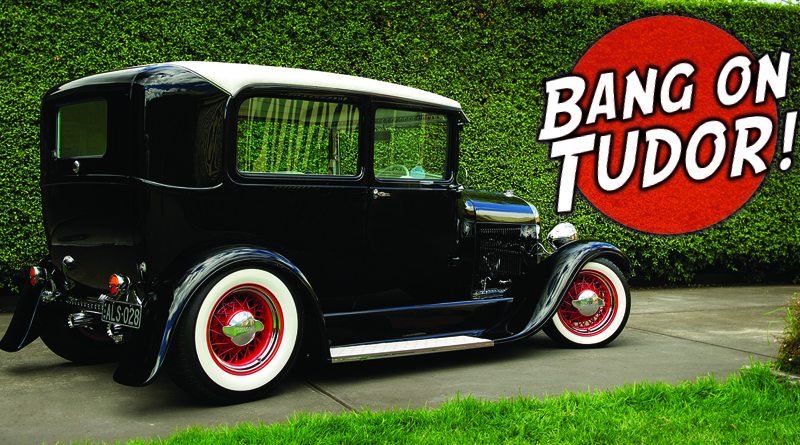
BANG-ON TUDOR – ALAN HALE 1928 FORD TUDOR
It’s no secret that Ford’s iconic successor to the Model T, the Model A, has regained global popularity among hot rodders in recent years. Once a foundation vehicle for entry-level restorers after its hot rod heyday in the 1940s and early 1950s, the humble A-bone is again enjoying renewed respect among a new wave of young rodders tapping into the traditional rod scene. Just look at events such as ‘The Race of Gentlemen,’ where traditional rods rule and having fun with what you bring is more important than a high-gloss paint job or modern engine.
This crowd has also embraced vintage engineering, breathing new life into the “pop-bang-wheez” inline four-cylinder engines that were considered suitable only for yard art less than a decade ago.
For collector and restorer Alan Hale, this rejuvenated interest in Edsel’s answer to the Model T is old news; he’s been a bona fide disciple since he bought his first ’28 tourer at age 15.
“Dad had five acres, and we always had Model As that we used as farm hacks and paddock bashers. Flathead V8s were always in the background, but I never went down that path.”
During his adolescence, Alan lived next door to Rob Fitzpatrick, a street rodder, and got swept up in the excitement of turning his own tourer into a rod alongside his neighbour.
“Unfortunately, during the build process, the rules changed and made it almost impossible to get registration. Rob suggested I just restore it,” he recalls.
Since then, Alan has acquired a garage full of A-bones, including a barn-find tourer, a rare A400, and a stock-as-a-rock tudor that he and his wife Rhonda drove extensively across the country, often accompanying fellow restorer club members and embarking on many solo missions.
“All are original but modified to some degree,” he confesses. “We participate in the mud run with the tourer, and the A400 has a Riley overhead conversion.”
It was the exceptionally uncommon A400 that introduced Alan to veteran rodder and larrikin Tony “Webby” Webster, who also owned one at the time. But it was Rhonda’s initial spark that led to the collaboration between them to produce the triumphant tudor before you.
“Once I had the A400 restored, I wondered what to do with the tudor since I thought we had too many cars. It was Rhonda who said, ‘Why not rod it rather than sell it?’ That was all I needed to hear,” Alan beams.
After frequenting the Newcastle-based workshop for the past couple of years, Alan approached Webby with a proposal to sort out the chassis for the tudor, as this was all unfamiliar territory. Alan had a solid idea of what components he wanted to use and the finish to achieve, but not the experience of a seasoned rodder.
“I wanted a Rod-Tech I-beam front end and definitely a quickchange out back.”
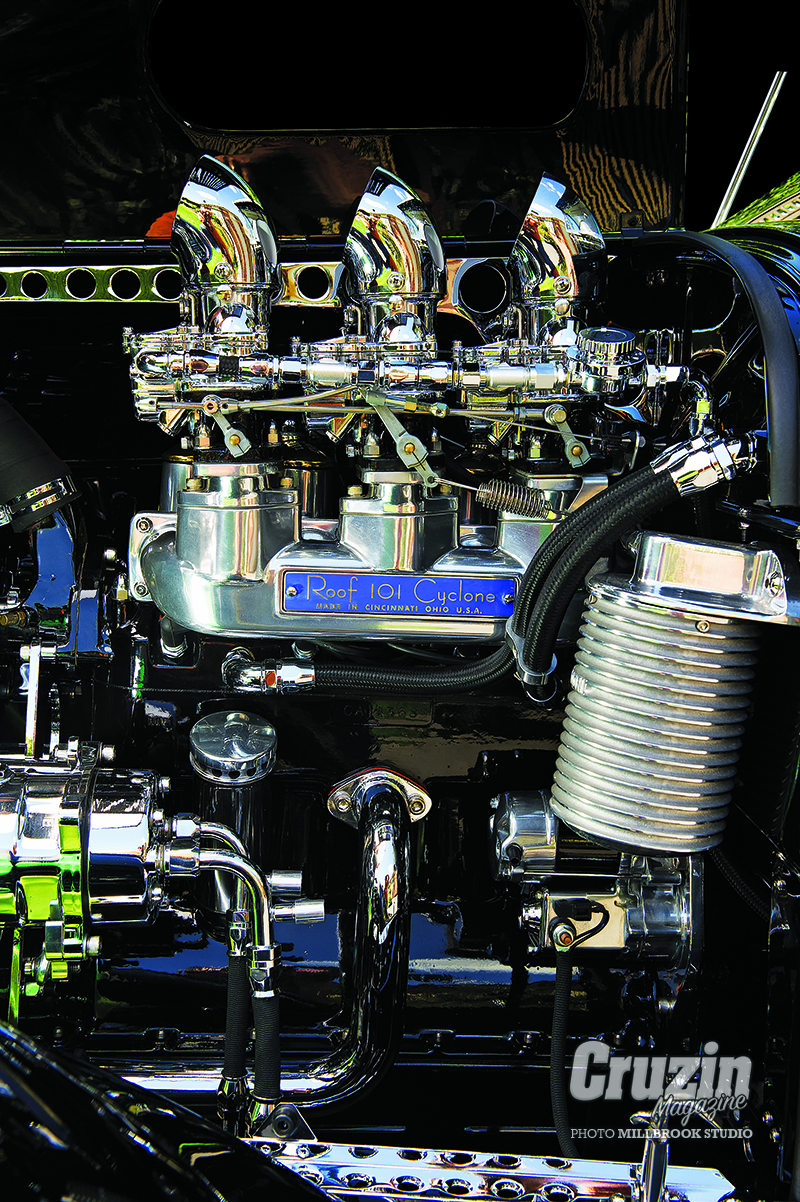
Alan purchased the tudor back in 2000 and has been an avid member of the “Secrets of Speed Society” in the USA for quite some time. The club is dedicated to hopped-up T and A four-bangers, salt racing, and related speed equipment, with Charlie Yapp at the helm. Charlie was responsible for reproducing the famed Riley head that resides in Alan’s A400 and more recently teamed up with Jim Roof, grandson of the original Roof Cyclone 101 overhead valve designer Robert Roof, to manufacture a refined version of the revolutionary four-port head. Invented in 1928 and widely considered to be the first overhead available for a ’29 four-banger, it unleashed an extra 60 horsepower, propelling Robert’s own roadster to 101 miles per hour—hence the name.
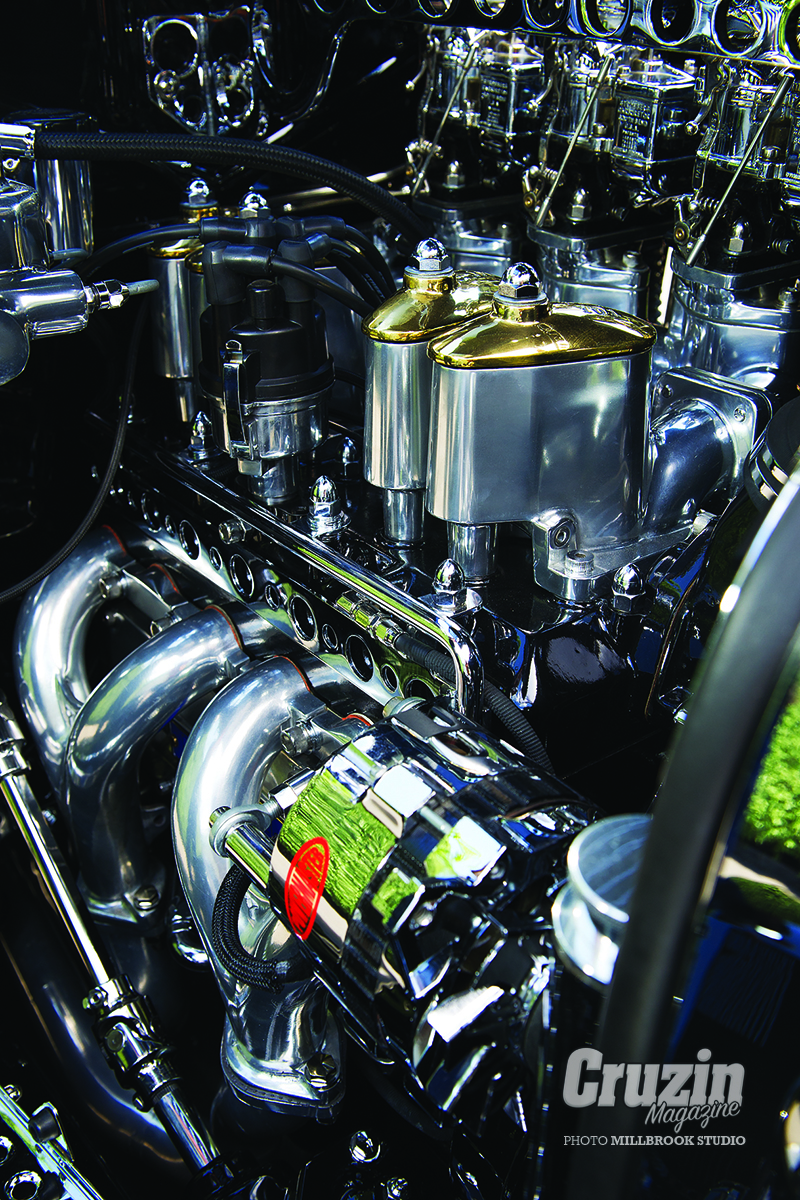
When Alan and Webby first discussed the direction of the tudor build, the idea of a ’70s-era rod was considered, but once Webby saw the Roof head and intake, the focus shifted to showcasing that stunning component, now mated to a B Model ’34 truck block.
True to the old craftsman’s style, Webby deburred the entire vintage four-cylinder and polished all the shiny parts to an insane gleam. It’s also backed by a fully polished alloy T5 manual, just because.
I recall viewing the free-standing engine in Webby’s shop a year or two ago; it was absolutely jaw-dropping. I knew then and there this Model A would be a standout!
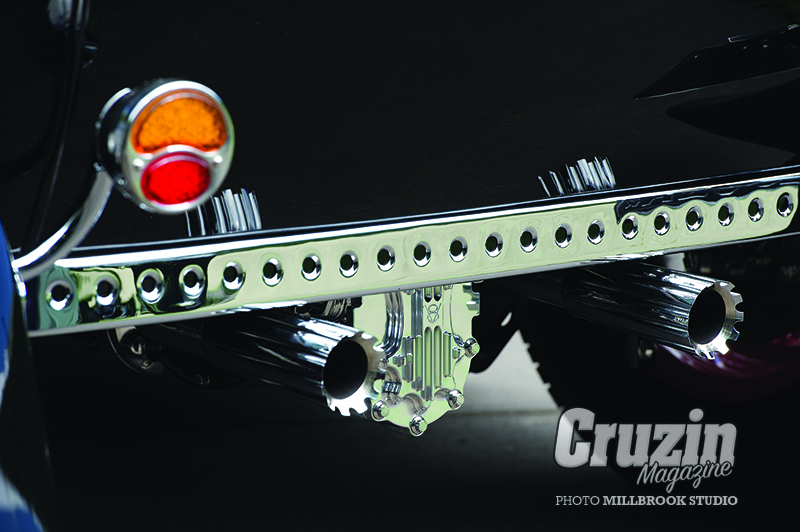
To position the prized jewel in its rightful setting, Alan presented Webby with a mint ’30 model frame as a sacrificial offering worthy of the evolving project. In the skilled hands of a fabrication wizard, the finished chassis is a work of art that performs even better than its show-only persona.
Now sporting a stepped rear and one of Webby’s sweet C-section X-members, flanked by the Rod-Tech drilled I-beam and Winters V8 quickchange rear, the modified original rails were smoothed to perfection before being coated in deep black gloss paint. In an unorthodox move for Alan, Webby added rear airbags to the suspension, allowing full adjustability at the touch of a finger when passengers are aboard.
“It was Webby who suggested the rear airbags instead of coil-over shocks for ease of adjustment, as we like to drive the car often. I didn’t know any better and liked the sound of the idea,” Alan recalls.
Further chassis refinements include concealed brake and fuel lines that run the length of the boxed rails, exiting through subtle flanged ports at either end. An electrician by trade, Alan expanded his 240-volt skills to wire the entire vehicle in a similar fashion, concealing all unnecessary electrical arteries in the process.
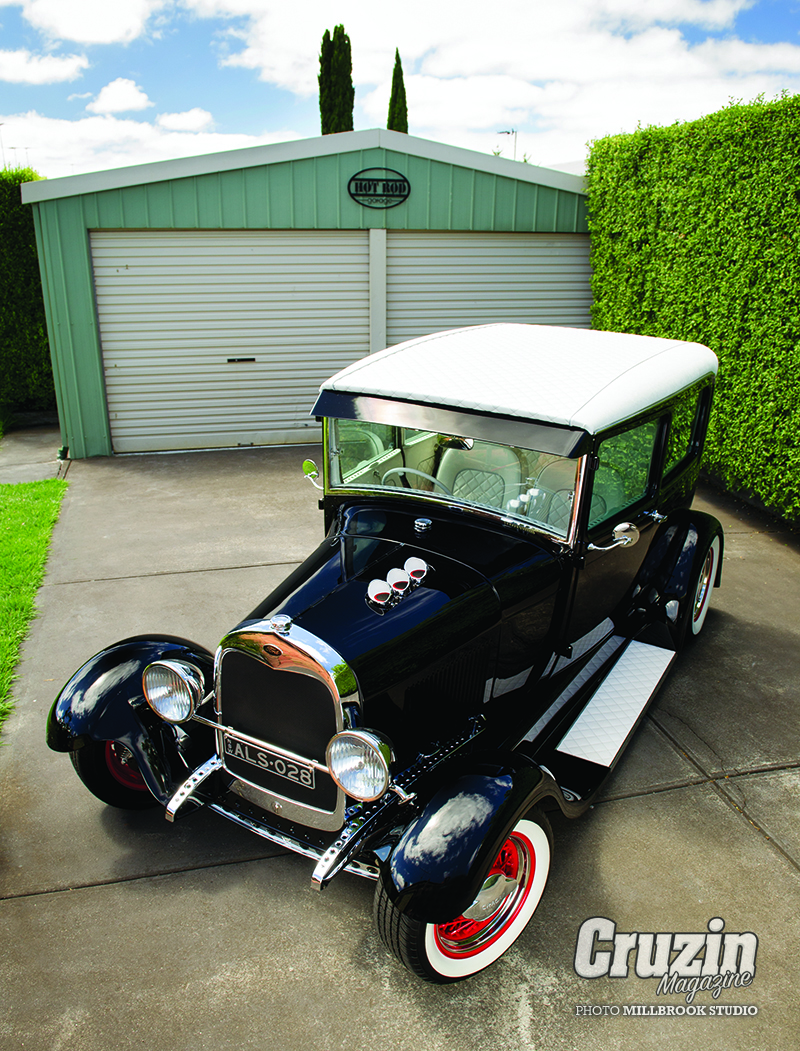
From the get-go, Alan and Rhonda wanted a black hot rod with red wheels and whitewalls. Simple! Suitable red rolling stock was achieved by outfitting the tudor with True Spoke Hot Rod Wires and Diamond Back whitewalls from John Cain. Easy, right? But when their attention turned to the body, things became more and more intricate as the phenomenal rolling chassis began to dictate the ultimate direction of the exterior appearance.
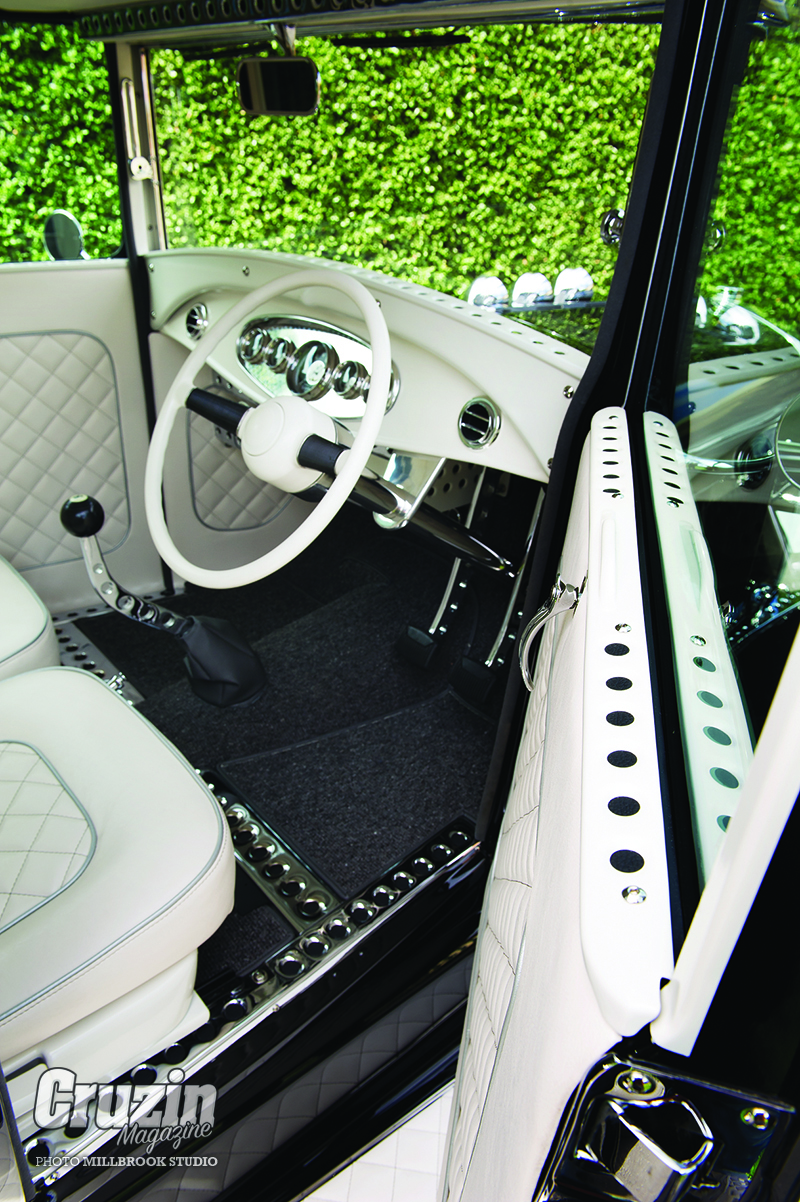
One area where Alan was steadfast was not altering the virgin body.
“I wanted the body stock, but as low as we could go. I like chopped cars but didn’t feel it was necessary,” Alan said adamantly.
With a blank canvas in the Model A, Webby was challenged to complement the gorgeous undercarriage and landed on the dimple die theme that was already prevalent throughout the frame. Once given the go-ahead, he was relentless, and every solid panel he deemed necessary for lightening received the Swiss cheese treatment. With more dimples than a Hyundai after a hailstorm, he should be grinning from ear to ear—with sore hands for years to come.
As the exterior was always intended to be black, Webby threw Alan and Rhonda a curveball out of left field regarding the upholstery.
“He told us about a similar car with a black top, running boards, and interior and felt it all got a bit lost. He just said to go away and consider doing it all in white! I thought that was just terrible. I couldn’t even find anything similar on the internet to compare. In the end, we agreed and figured it’s only vinyl, so we could always replace it if it turned out badly.”
With the decision made, it was the Hales’ turn to provide their input on the stitch style for the swathes of vintage white vinyl.
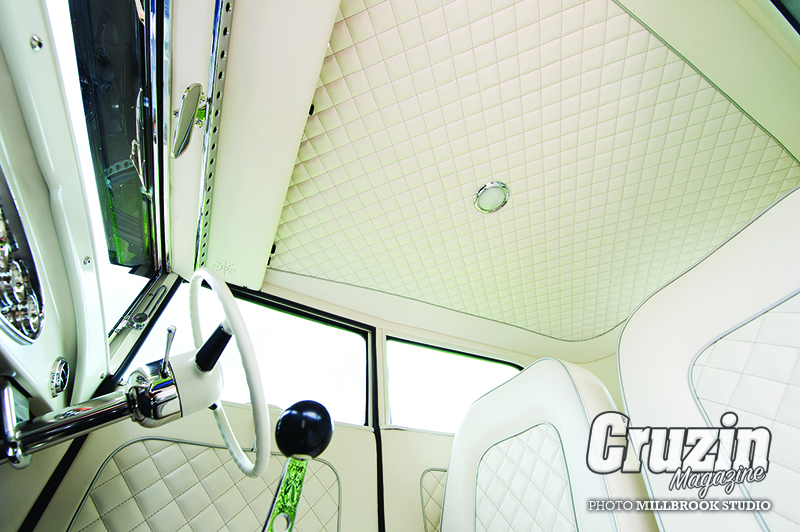
“We were at Leura in the Blue Mountains when we stumbled upon this obscure homewares shop selling furniture and whatnot. They had a vintage aircraft chair with a diamond pattern. I took a photo and we both agreed it would be the design for the hot rod upholstery. We took it to show Tony and he just said, ‘Shit yeah!’ It was he who swayed us into the white external top, though.”
As the interior plan materialized, Scott Briggs at Trik Trim in beautiful Forster was given the arduous task of completing the mammoth undertaking. While the Daihatsu Charade front seat cover may have been a walk in the park for this talented trimmer, hand-making the rear and executing the miles of diagonal fine lines inside and out must have him in therapy by now.
Once the last stitch was sewn, a race to the finish line for the exterior ensued as the tudor was to debut at the 2017 Victorian Hot Rod and Cool Rides Show. After four years in the build, there’s nothing like a deadline to bring it all together, and Alan had been in constant contact with the tudor throughout the duration.
“I was at Tony’s every week to follow progress and collaborate on ideas that popped up throughout the build. One example was the triple 97s that wouldn’t fit under the hood. Tony suggested that we poke them through the top, and I was really against it as it wasn’t what I wanted. I conceded that it was only a $600 hood, so just do it! Now we all love it. There were many times like that where he would throw us ideas and we would go home and contemplate them before giving our blessing.”
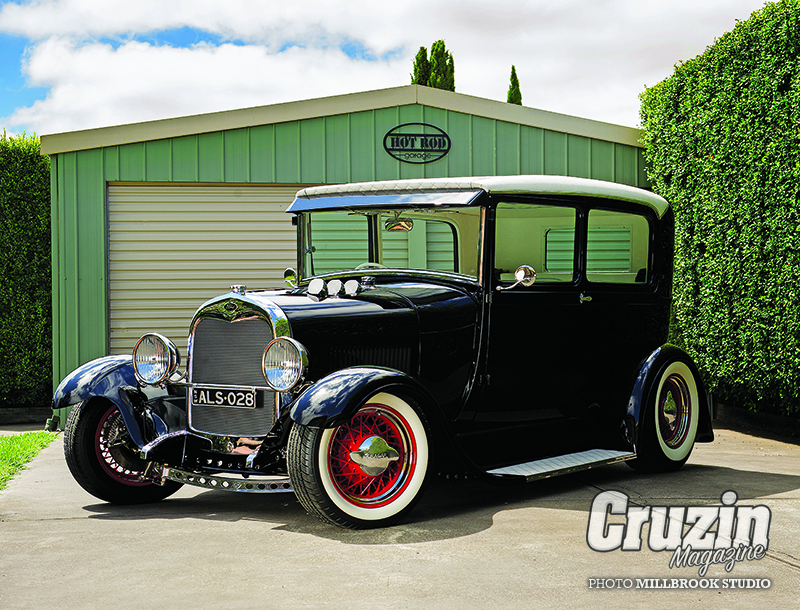
Gleaming in PPG Jet Black applied by Merv Hardimon at Classic Auto Refinishers, the tudor was buttoned up and trucked to Victoria with only hours to spare. By the end of the show, it was clear the owner and builder loved what they created, and it wowed judges and show attendees, earning 1st place Tudor, Top 5, and Top Street Rod of the show. Since then, the tudor was awarded a Top 8 at Queenscliff during its maiden rod run. Not bad for a shiny black hot rod with red wheels, I’d say!
“The car is so much more than I expected. It looks and drives amazingly. One day I’ll sit back and take it all in, but for now, it’s almost overwhelming. We just wanted a hot rod to take to runs and never expected the tudor to win show trophies. Our vision was a shiny black car with red wheels and whitewalls. This is what evolved because of Tony, and we love it.”