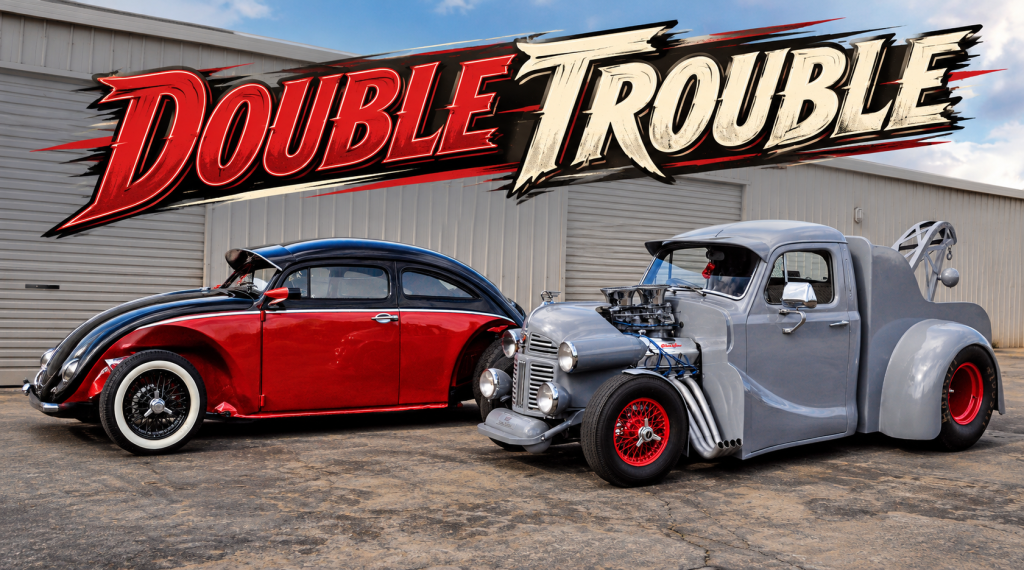
DOUBLE TROUBLE – GARRY KLINGBERG 1949 AUSTIN + CUSTOM VW
In his younger days, Garry Klingberg worked long hours for many decades, leaving no time for four-wheeled fantasies. Now comfortably retired in the Mt Gambier region of South Australia, he tinkers and toils daily on myriad projects and regularly lets his creativity off the leash, with complete disregard for registration rules.
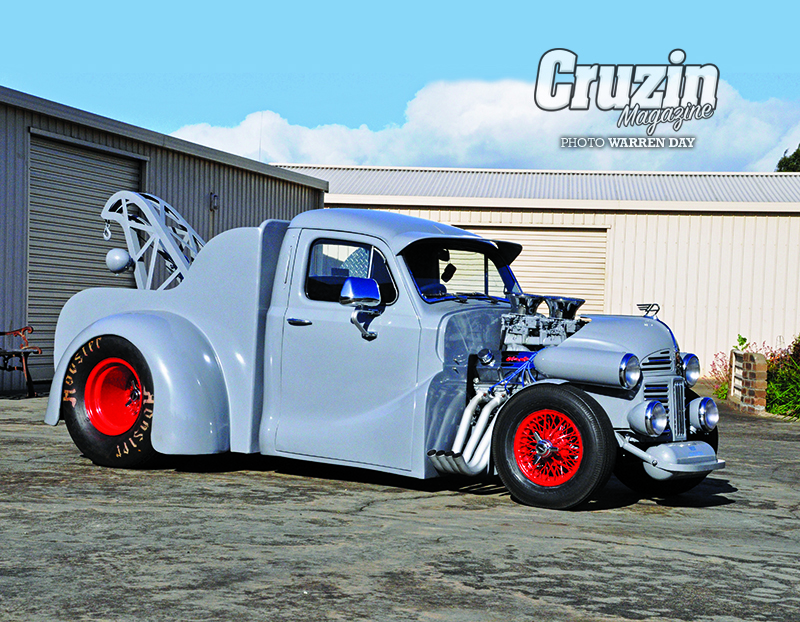
We first caught up with Garry five years ago when we featured his wild, bright green Morrie with its exposed, rammed 351 and mammoth tires. The Beetle was just starting to take shape, and we asked him to let us know when it was finished. He’s been busy. Also in the garage was a 1949 Austin pickup. It was always going to be something different, but a tow truck was never part of the plan at the time.
It all started with a set of old, knackered Hoosier speedway tires. A mate kept pestering him to take them for decorative purposes. Garry did, but figured he’d actually use them instead, and the tow truck idea was born to accommodate them. The chassis remains standard, but it’s been strengthened, and nestled between all that Hoosier rubber is a Mitsubishi L300 diff.
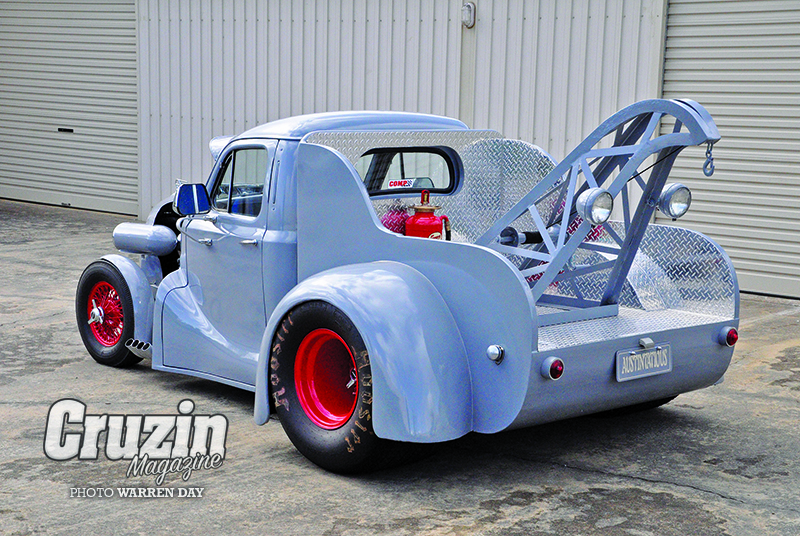
Having a set of 23.5” tires is one thing, but what about rims? He started with some 15×8 steelies, cut them in half, and widened them with—wait for it—an LPG gas cylinder! From his stash of MG wire wheels tucked away in the corner of the garage, one pair was machined down and fitted to the deep rear rims as hubcaps to match the front runners.
Garry fabricated the entire rear tray, pilfering discarded fenders from the Volkswagen project and cutting and modifying them to cover those humongous Hoosiers. Moving forward, the standard cab was channeled 10” over the chassis, and the firewall was completely smoothed in anticipation of the free-breathing Ford motivation.
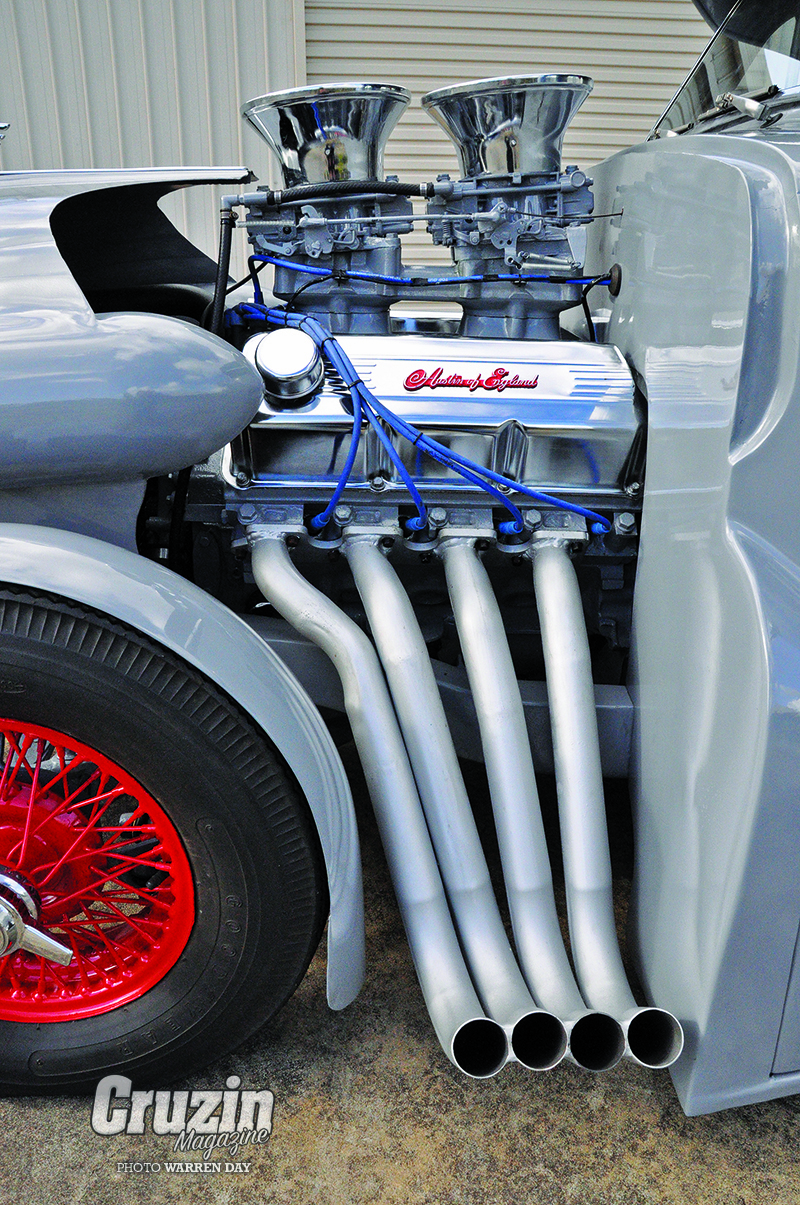
The 302 Cleveland has been upgraded in the three basics: cam, carb, and pipes. The big and bumpy solid Competition cam orchestrates breathing in through twin 650 Holleys and exhaling through Garry-fabricated Zoomie pipes. Trust me, its sound only emphasizes its attitude. Between the angry 302 and the L300 diff—which is a bit of an oxymoron in itself—is a C6 transmission fronted by a 2800 rpm converter.
The foundation for the custom quad headlight front is a 1950 Austin Hereford ute. Moulded into the sides are King of the Road lights mounted in custom pods, with forward illumination amplified by a pair of standard lights. Oh, and beneath all that is another Ford Prefect front end.
The industrial grey paint only adds to its working-life persona, and the interior is equally minimalistic. Garry made the church pew-like bench seat and door cards, then had a mate stitch up the covers for Garry to install. He reckons it will be his first and last foray into trimming!
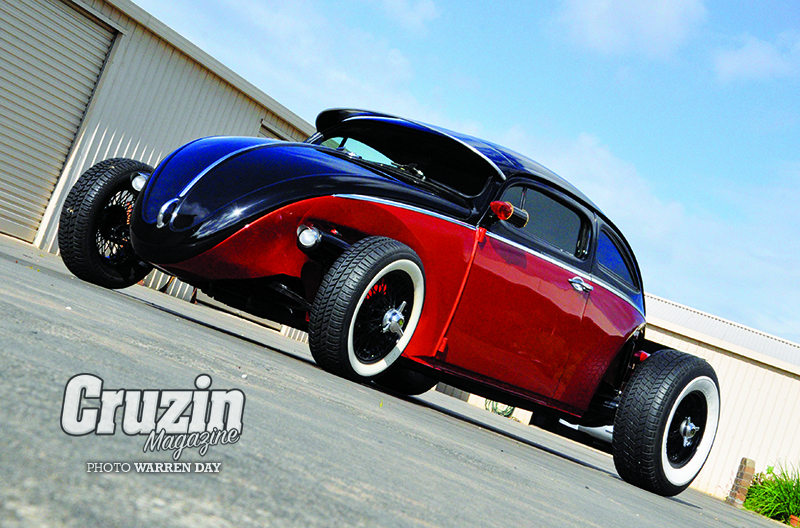
Now let’s look at Skulbugery, or as it’s become affectionately known, ‘Choppy.’ As Beetles became increasingly difficult to acquire, Garry figured he’d stock up and had three at one stage. The best of the bunch was used for this project, while another was transformed into a Baja bug, complete with Commodore V6 power. Just like the Morrie, the Beetle was destined to be different—really different. The chopped lid was the key ingredient, and with enthusiasm high, the build began. Garry was chuffed with the radically reduced windscreen but disheartened by the shape at the rear. He shunted it to the corner while he contemplated his next move. Eventually, he came up with the plan to cut the roof in half and position the rear half exactly where it was needed to achieve the lines he desired. He nailed it, but only after welding in a 14” strip down the middle. Door frames were cut and massaged to fit, and Garry fabricated the gutters.

Garry got creative with the various light mounts. The rears are clearly ’59 Caddy lenses, but the curved mounting pods are a mix of stainless cocktail shakers and PVC pipe. The dual-purpose door pods house another set of Caddy indicators and mirrors. The headlights are interesting—the driving lights are housed in pods shaped in fiberglass around clay vases!
Garry does all his own painting, and in this case, he loaded the gun with Toyota Aurion Inferno Orange for the bottom half, while the top received a basic black. The radical approach to the body wasn’t transferred to the drivetrain, where the original German rear-engine structure has been retained. The 1600 air-cooled flat-four was stripped down by Garry, and he upgraded it during reassembly. Adding some attitude is the Engle cam, which—even despite the car’s limited use—Garry admits is probably too big. With a rework of the heads, he bumped compression to 11.5:1, requiring a diet of Avgas, which is delivered via twin Solex carbs.
Garry reckoned the standard front suspension was ugly, so he replaced it with a ’48 Ford Prefect beam axle unit he had lying around. The rolling stock is just as interesting: all four wheels started as MG wires. The fronts remain untouched, but the rears were machined down and then welded into larger 15” rims. Whitewalls add a nostalgic touch.
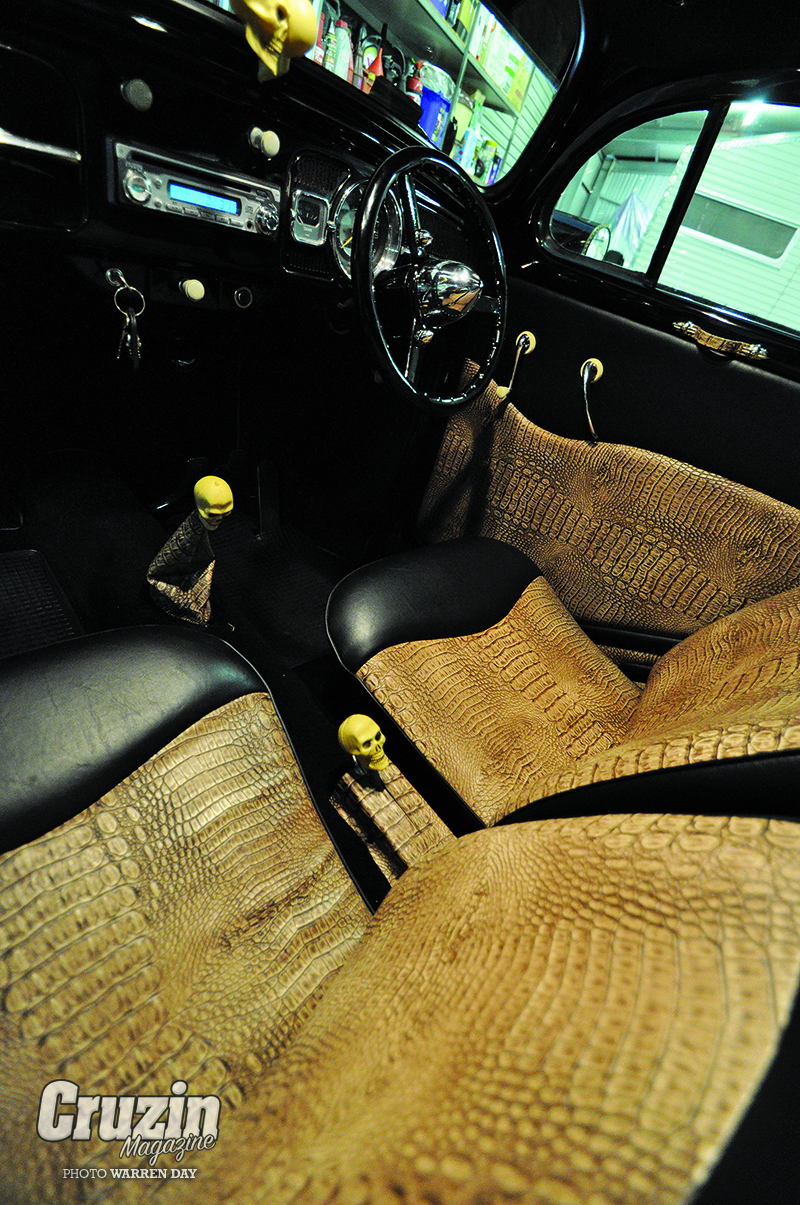
Danny Anderson followed Garry’s creative lead with the interior trim, making croc skin the hero, contrasted with black vinyl. The front seats had to be dropped 3” to accommodate anyone over four feet tall. Choppy has been carted all over southern Australia and has been well received wherever it’s gone—even among the purists at events like Volkfest and Day of the VW in Adelaide.
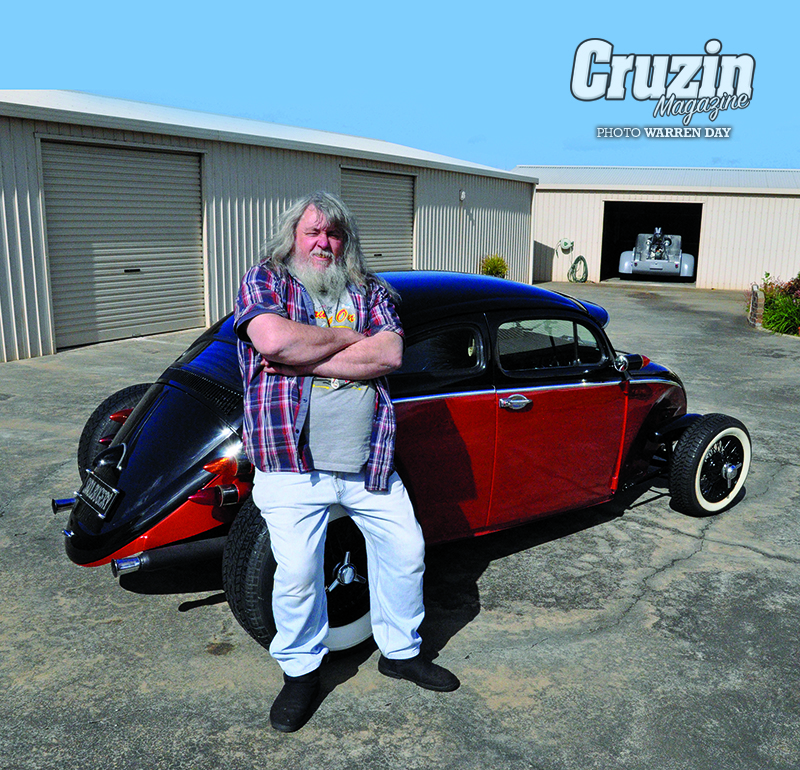
Most of us would grapple with the concept of building a car you can’t drive on the road, but when you learn these wicked wonders came in at a build cost of less than $7k each, that equates to cheap fun in anyone’s language. Plus, Garry’s calendar is full of events where he takes any one of his rebellious rides!