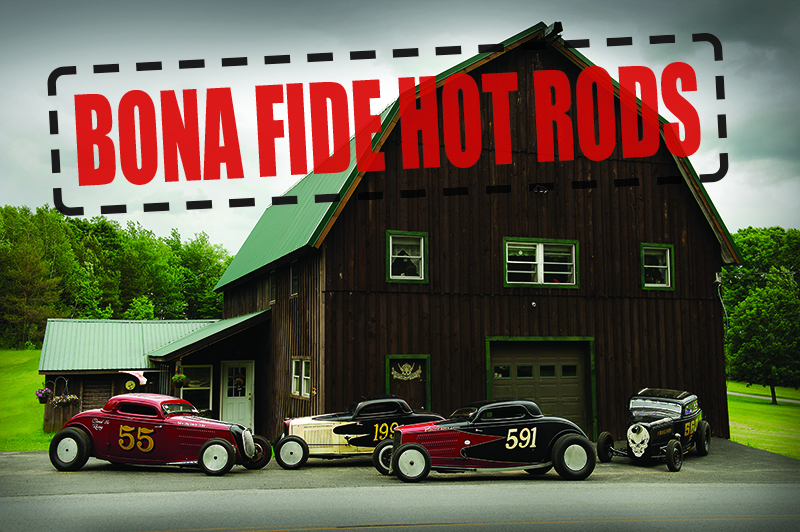
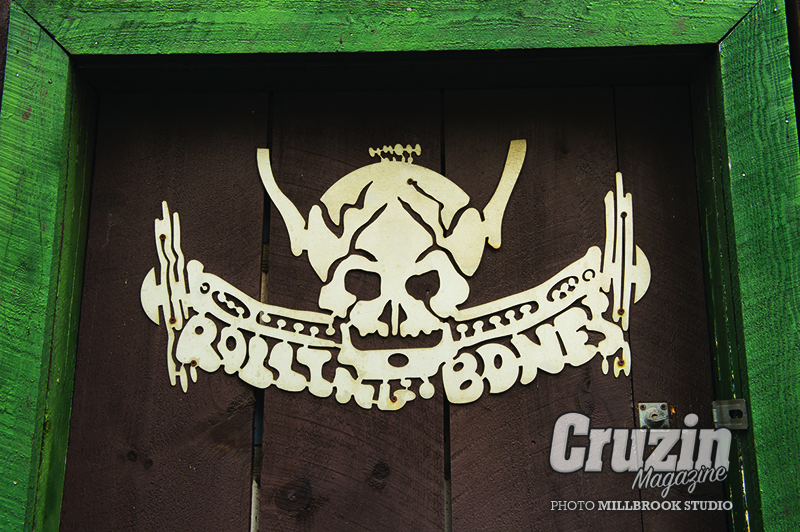
BONA FIDE HOT RODS – ROLLING BONES HOT ROD SHOP
Throughout my photography and journalistic career, I have met, photographed and made friends with many interesting individuals, celebrities, sports stars, world leaders, royals and extraordinary characters. Recently, I was privileged to spend time with the guys from Rolling Bones Hot Rod Shop in upstate New York.
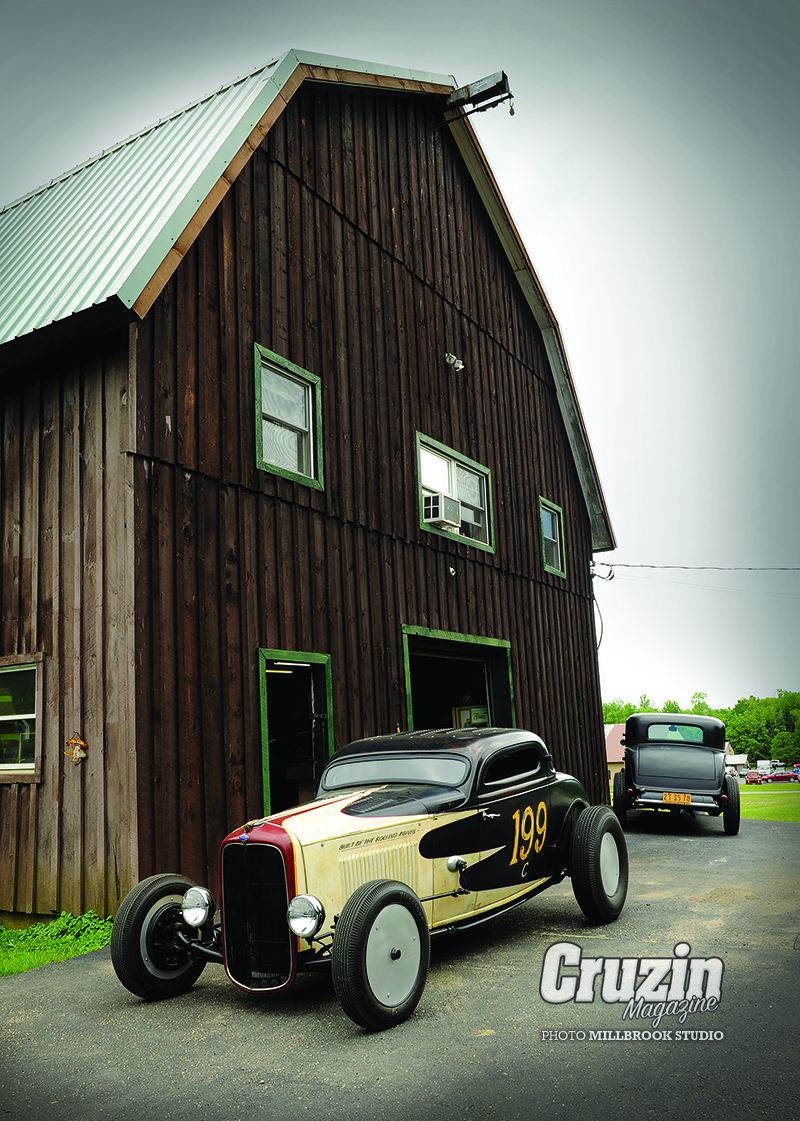
For any hot rodder with access to a magazine or social media over the past decade, the Rolling Bones name is now world famous for creating a bunch of distinctively built early Fords that are unambiguously hot rods of the purest kind. Sporting aggressive top chops, loud traditional engines and unmistakable paint jobs, they have generated a hardcore flock of disciples and spawned a new generation of lakes-inspired hot rods to hit the streets.
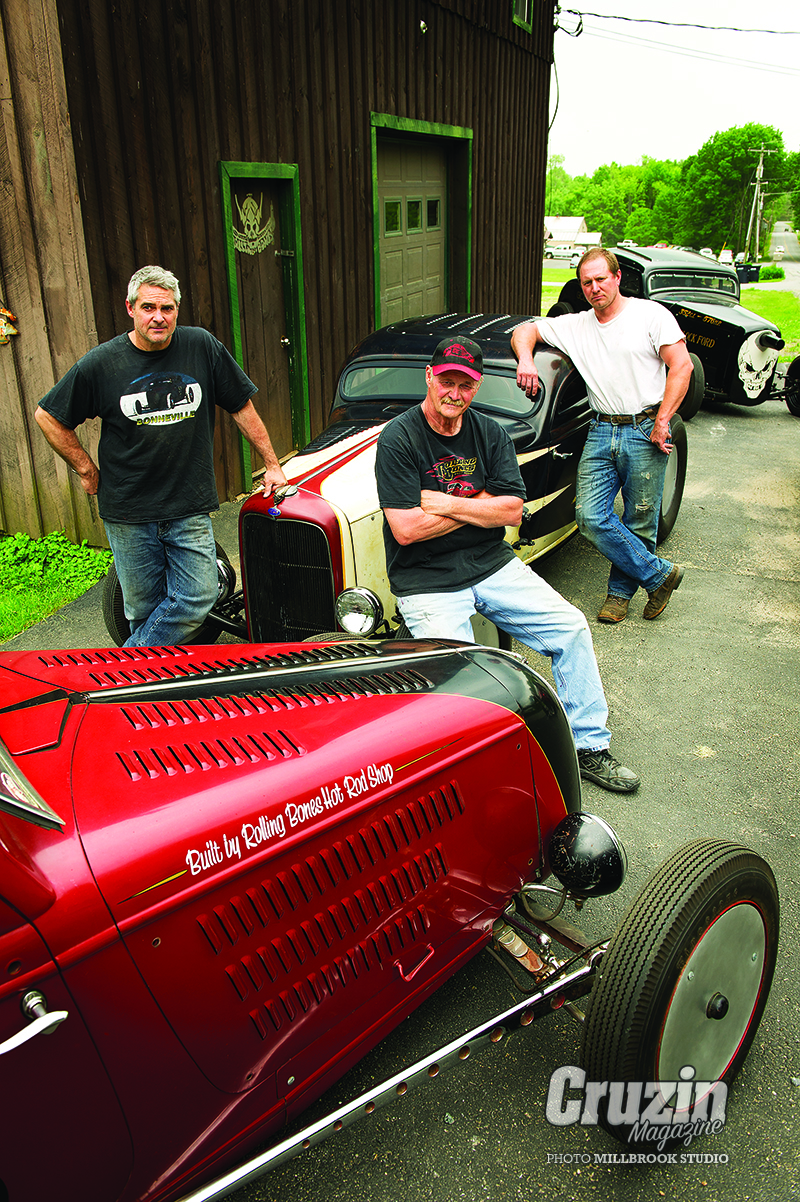
I first met Keith Cornell at Bonneville in 2014- yeah, the one that was washed out- but I struck up a friendship with Keith because of the downtime due to the unprecedented rain. He was trying to hit 200mph in his Y-block-powered ’32 coupe that weekend but had to be content with retaining his previous record of 188.562 and his title as the world’s fastest Y-block. Not a bad fallback, I’d say. When I contemplated attending the Race of Gentlemen in New Jersey in 2016, I contacted Keith and secured an invite to conduct a shop tour for readers back home. There, I met the other half of the Bones partnership, Ken Schmidt. I recalled briefly meeting Ken in Bonneville, but at the time I was overwhelmed and dazed by the event, and Ken was cool, calm and collected and a little scary to approach in comparison to Bones’ poster boy, Keith.
Getting to know Ken over the TROG weekend at Wildwood was a blast and a bit like getting to know your future father-in-law. At first, you don’t think you measure up, but he’s polite, wise, and his stories captivate you. Then when you think you know him well enough to feel at ease, he hangs shit on you, especially in good company! I guess at that point a friendship starts to form… unexpectedly. Spending the day riding shotgun in his ’33 coupe from New Jersey to New York will be a memory near impossible to erase…God willing.
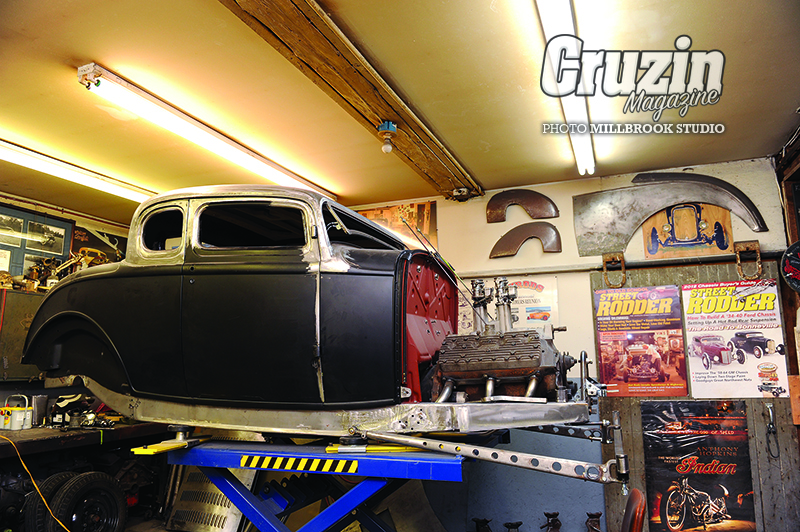
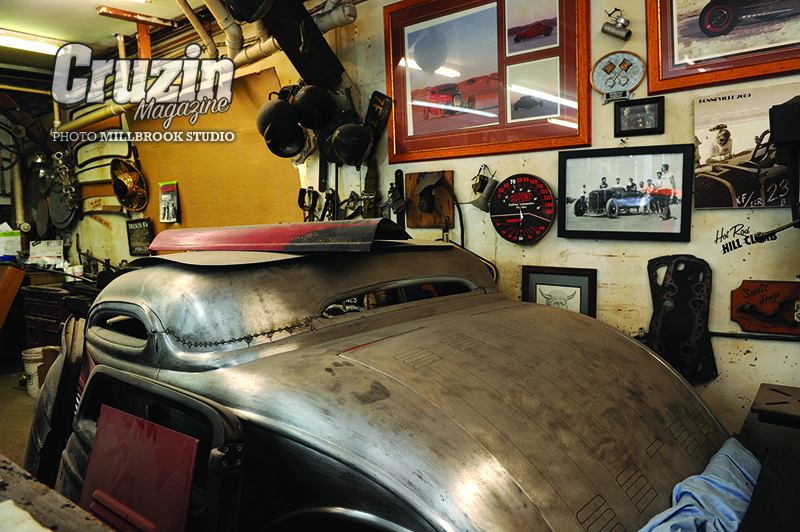
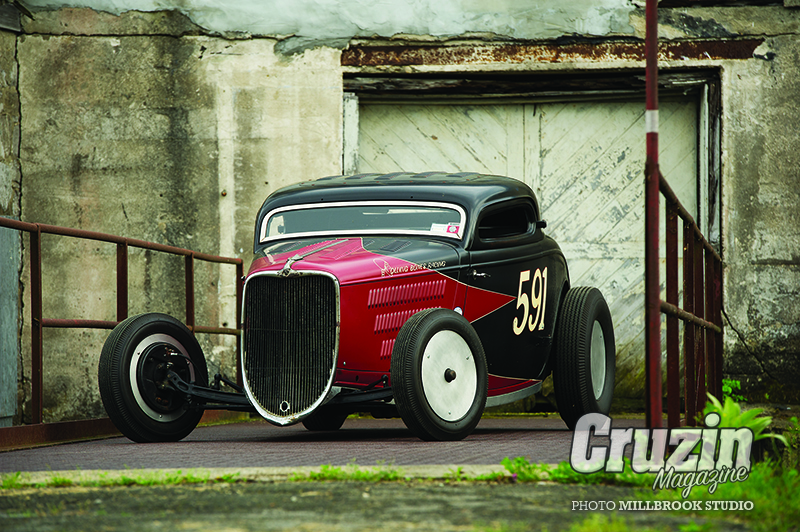
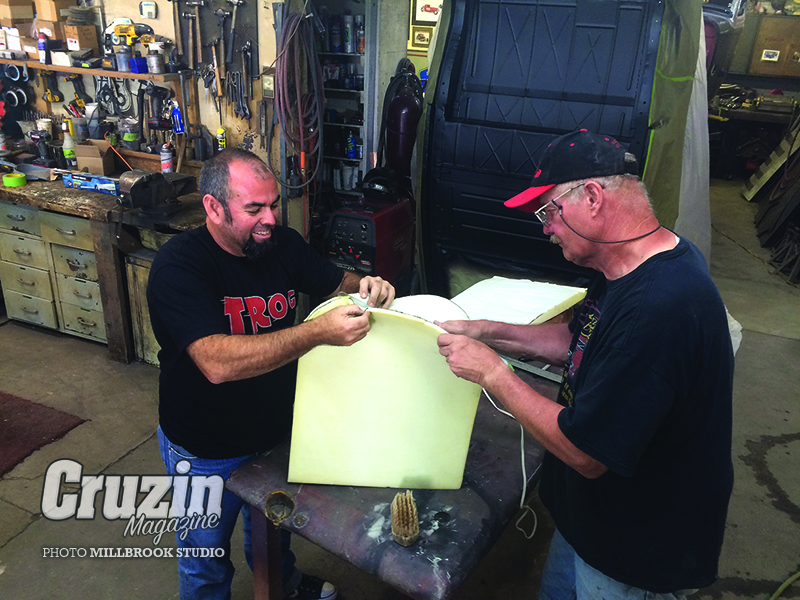
During my short stay in the inner sanctum of Mr Bones’ lair, I was given free rein to wander, poke, prod, and eventually lend a hand. Although we had just arrived from the heady highlights of TROG, Ken was about to embark on a cross-country trip to LA with the 591 coupe and three other hot rods, one being a brand-new Model A three-window coupe finished the day I departed.
That’s become one of the major defining components of owning a Rolling Bones hot rod; you don’t just get a finished vehicle to turn up on your doorstep, but a chance to experience life as they live, driving your very own balls-out early iron halfway across the country as a shakedown run. If that’s not what you’ve signed up for from the beginning, then maybe you’d better find a rod shop specialising in shiny paint, crate LS motors and air conditioning.
Ken is unashamedly determined to build only cars he and Keith like. Yep, note the full stop! If it’s a Ford you desire in their style, you may be in luck, but the waiting list is long, and they’re in no hurry to get rich by changing their ways or how they build hot rods.
“It’s never been about the money,” Ken affirms.
So I dug deep to find what compelled these two average guys to give up their successful careers to build go-job jalopies in a cow shed… or barn, as they say, deep in the northern state of New York.
“One day my brother Jim and I sat down in his knife shop and thought that we would start a hot rod club with no meetings or dues or rules. A lot of people say that they want that, but we did it,” Ken begins.
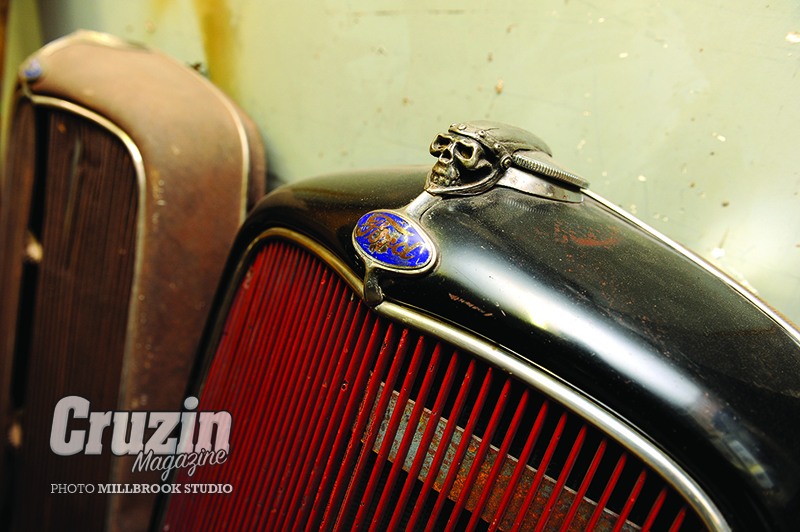
“We started thinking about some names and Rolling Bones came up… people call the frames of old cars the bones of the car,” he iterates.
Lone Wolves and Wolf Pack were a couple of others that they kicked around because they were all individuals, but the Bones moniker stuck. Ken recalls that this was close to 20 years ago… when his late brother was still with him.
“It’s been 15 years now,” he sighs. “Keith and I had no intention of opening the shop. It just morphed into one. We were just a bunch of guys that ran around to shows together. We had the (Rolling Bones) plate toppers but never a T-shirt or anything.”
My interview with Ken was an impromptu moment as we shared a cup of tea and slunk back on his sofa. I couldn’t imagine a better place to capture his story. There were no interruptions, no phone calls or workshop agendas, just two artistic gearheads getting to know each other a little better.
Ken spoke fondly about his beloved brother, commenting more than once that “Jim” was a true artist compared to himself; an accomplished fine art painter for more than 25 years!
“He was one of the best damn knife craftsmen in the world,” he states with admiration.
At that moment, he jumps from his easy chair and scales the homemade staircase to return with a huge hardbound book. Oh yeah, Ken is also an accomplished house builder in bespoke design. He even hand-made all the nails in his current owner-built abode, but that’s a whole other story.
He gestures the heavy book forward to my lap, where I reveal pages upon pages of magnificent handcrafted knife blades encased in exquisite handles whittled from an astonishing array of exotic materials. Ken even entrusts me with an actual knife to view and caress. I know this may seem off track, but until you know about Ken and his creative sibling, the Bones phenomenon doesn’t add up. I believe this artistic element extremely defines what Ken, Keith and now Ken’s son Matt do daily. They don’t just build hot rods; they are works of art. And beyond that, they also create escapism time machines for their owners to enjoy, whom they consider family… not customers.
“Most people in general like to bring people down to their level,” he says, bursting my euphoric bubble. “Keith and I were building our coupes, and we were about in the middle of that when my brother passed away. When we started to build cars for other people, a lot of our friends drifted away. I think there was some jealousy or something. Keith was one of the members that my brother and I ran around with. He had a black ’34 roadster with a really great-sounding flathead. Naturally, he and I bonded because we both liked similarly styled cars. I had a ’29 roadster at the time that I bought but was in the process of making it cooler. It was almost a billet street rod, and I took it backwards. It was a good-looking car when I bought it, and I changed it to how I liked it… more of a retro style, I guess, with louvres down the centre of the three-piece hood, different headlights, and a different dash. It was featured in a lot of magazines in its time.”
“I told my wife that I was going to build another car. It’s not going to be very expensive… probably in primer, a flathead, and nothing fancy…. a bare-bones old hot rod. At the same time, Keith was building a ’32 three-window for a guy, and he said, ‘If you ever lose interest, he would buy it off you.’ He did, and Keith did. I wanted a 3W and didn’t have a shop or anything. Keith and I became pretty good friends. I had this vision of the Donne-Spencer roadster and how I wanted my coupe to capture the essence of 1947. I had a friend working on the frame who I was trying to get to start his own business.”
“When I bought the coupe, it had an aftermarket chassis set up for a Chevy. At the time, my son was picking up rocks for a farmer. They would surface behind a three-point plough and be placed on the hedgerow. That’s why all the farms around here have stone walls. Matt was about 15 years old; he’d been working for the farmer since he was 12, when he noticed a chassis on the farm and asked what it was. ‘A ’32 the farmer replied. Matt tells me that while he was picking rocks, he saw a set of wire wheels sticking out of the hedgerow and found a complete chassis, gas tank, transmission, column and both front and rear ends. He got it for me for 50 bucks. That’s the frame, axle, and wishbones under the ’32 coupe. I swapped the gas tank with Keith for chopping the top.”
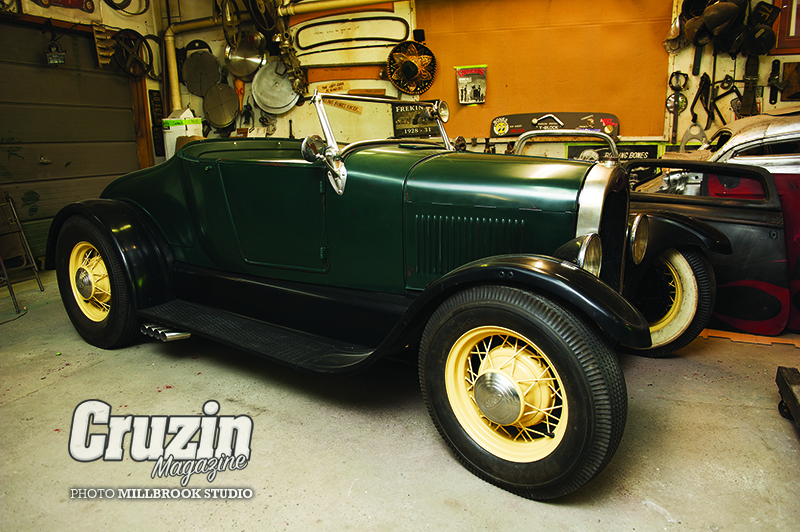
“I set the frame up in my garage and made a bunch of cuts and changes and took it to a friend to weld it together. I kept doing this back and forth until I got to where I wanted to be. Meanwhile, Keith was chopping the body. I had no welder… I was painting pictures. I was out of cars except the roadster. Keith didn’t know what the frame looked like and my friend didn’t know what the body looked like. Keith had bought that other ’32 body by then and was going traditional front end with a square chop like every other one that’s been done.”
“I had the chassis back on rollers, and I fitted the sheet metal and made the headlight bar and put the grill on. The body was in red oxide, chopped 5 ½ in the front and 5 in the back. I wanted it laid back and all that. The chassis was at my house, and a few of my friends and I go get the body and put it on the chassis. We sat down on this snowmobile trailer that we brought the body home on. It was almost dusk, and all five of us sat there just looking at it together… without saying a word. Nobody had an idea of what I was doing. Maybe a few “holy shit’s” were whispered. Keith had built a new frame similar to mine, pinched and all that. He put his body on the new frame, but the chop is the same, and he says, ‘That ain’t going to work!’ When we went to all those places, he said to me one day that my coupe was really cool. So he buys another mint 3W coupe out of New Hampshire that was painted yellow with a brush. Takes the body off and chops it like mine, just a little more. He sold the old coupe. Now he had a completely new car.”
“Keith and I were on the same wavelength. He was building a ‘32 3W for a friend from a pretty rough original car, and mine was the #575 3W coupe. He was an insurance adjuster/assessor, and I was a painter. We built both our cars together in his hobby shop. When we were done, so much interest popped up that they started appearing in magazines everywhere. They were our ticket into places, and then other people started asking us to build one like ours. We built two hot rods that we liked, and everyone wanted to buy them.”
After a second or third cup of brew, Ken recalls one of many funny stories that continually surround the two untamed coupes.
“We pull into York, Pennsylvania for the Street Rod Nationals, about 4,500 cars in total, and about 4,000 cars were trying to park around the host hotel. If you knew where you were going, you could go in the back way,” he chuckles. “We came down the hill with our coupes downshifting and back farting, and everyone else is shiny, what colour red with a duster in the trunk, fighting for who’s going to park next to where. I pull in, and one guy rushes up to me and asks how much do I want for it. I didn’t even have my foot out the door yet. He said, ‘I’ll give you $23,000 for it right now.’ I thought, hey, that’s a good deal, since it cost me over $50,000 just in parts. Over the whole weekend, it was all about those two cars. We were going to park way down the back near the vendors or something, but some guys spent an entire day just looking at them.”
“There was this guy parked next to us that had a ’34 something that had paint so syrupy it was dripping on the ground. It had chrome and every nitty-noddy on it. People were backing up into it to take pictures of our cars, and he was so pissed. The next day he had his whole area roped off with police tape. We didn’t care,” he laughs out loud.
“Dennis Varni was our first customer,” he continues, straight-faced. “We were at the Father’s Day LA Roadster Show, and other guys would have prime spots but ask us to park next to them cause they knew the attention that they were getting. Dennis walks up… he is the guy with the easy smile… and he’s got that glint in his eye. I didn’t know what Dennis looked like, but I knew who he was, as he is in every hall of fame there is. He’s just a fun guy to be around. Before this, Peter Vincent shot our cars at El Mirage, along with five others, for Mark Morton at Hop Up magazine. Peter did this photograph of my coupe just by itself, and it went onto the cover of a calendar.”
“Dennis comes up to me and says, ‘Man, I love these cars. I got that calendar above my desk and I never even opened it. I just stare at that coupe, and here it is!’”
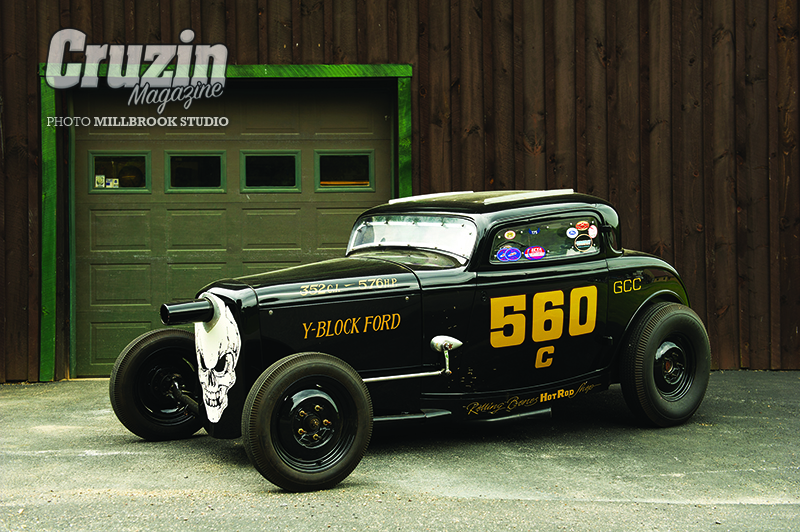
Ken divulges that by this time, he and Keith had become a little more comfortable with the attention after they went to Bonneville for a photoshoot and then the LA Roadster Show on Father’s Day in 2002, saying the coupes were 12 months old.
“This was the following Father’s Day swap meet. There were people constantly asking about how we did this and what we did there. I’ll never forget one comment that was: ‘you guys build better Californian cars than we do!’” he smirks.
“Anyway, Dennis goes away and comes back with a quick-change centre section under his arm. We didn’t think much of it. He sits it down behind one of the coupes and says, ‘Take that home with you’. Keith and I look at each other, thinking, what the hell… he’s giving parts away?”
“He talks some more and more, goes away and leaves the quickchange on the ground. I figure he doesn’t want to carry it around… I don’t know… he’s from California. Then he comes back a third time with a friend and introduces him as Steve Moal. I instantly recognised the name, shook hands, and he said the cars were pretty neat and proceeded to look them over. I turned to Dennis and asked him his name; ‘Dennis Varni he replied… and you guys are going to build me a car. But I don’t want a coupe; I want a sedan!”
“I took him out into the fairgrounds in my coupe, and he drove it around a little bit, and I took him back. He went off and returned with a set of gold wheels.”
‘This guy makes 25 sets at a time, and they are 1,000 bucks a piece. They’re racing something. How do you think these would look on the car?’
“I just said, man, they’re not right for our type of cars.”
‘Maybe you’re right,’ he says.
“He’s all excited and keeps coming back with more parts. I say, ‘Hey, just slow it down.’ We go home with all these parts.”
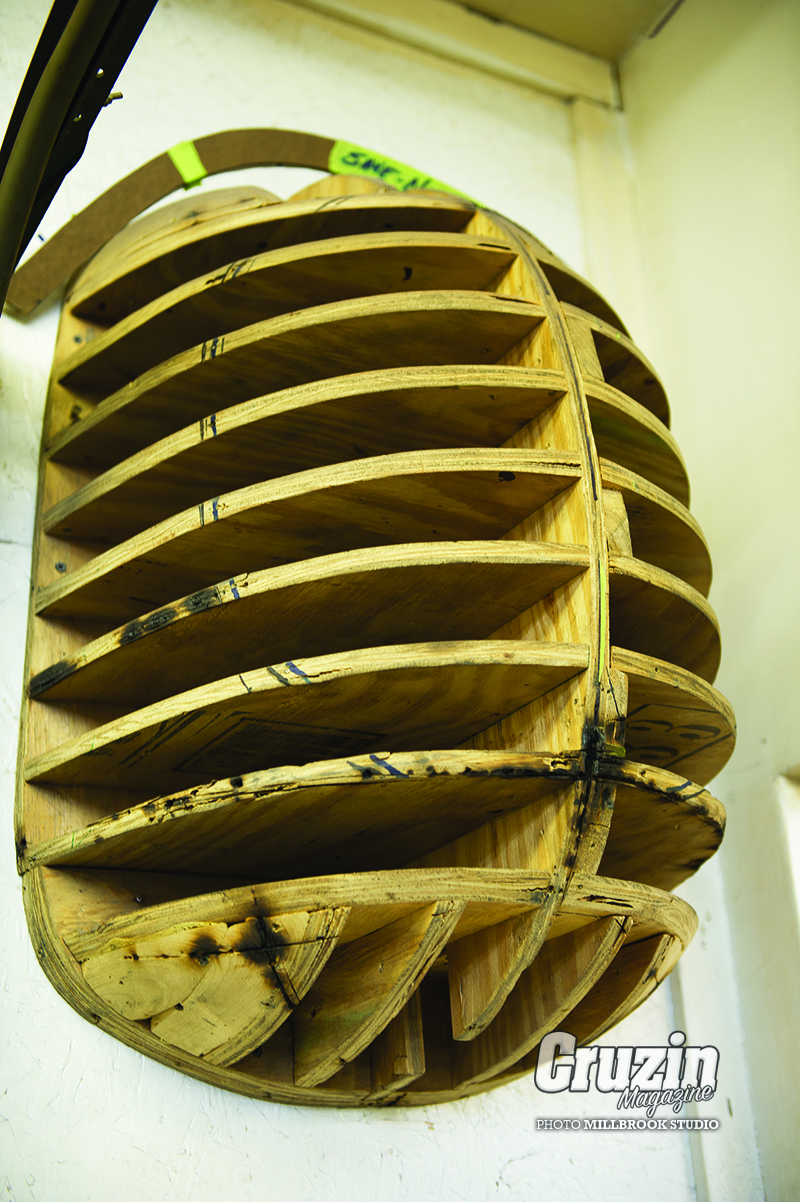
Ken recalls that two weeks later, Dennis flies out east, where they pick him up and take him back to the shop. He looks over a 1932 Tudor body that Keith had to build for himself. He hums and asks about the price, quips that they would add anything extra to the build if he got it for less, and mentions that his wife only gives him so much for his car account.
“He likes to play the game,” Ken quips. “He really was the one who started it. He just wanted one of our cars and was beyond happy when he did. That was the first car we built for someone else. That was our path. I did look at a business plan prior when Bruce Meyer considered having us build him a car, but that never eventuated. I learnt early on how to control my own finances with my artwork rather than fund an arthouse. Now I apply it to the hot rod shop.”
“When we realised that we had come up with something pretty special, and it didn’t take long, I can’t lie enough to exaggerate the impact of those cars. I think we were a couple of guys who were naïve to the rodding world and just built cars we liked. It didn’t matter to us. We didn’t set out to build two wild cars to shake up street rodding because it was new; we built them for only one reason… because that’s what we wanted. She may not be the prettiest, but she’s a little dirty, a little beat up, with a lot of attitude,” he grins.
After a break to catch my breath, I ask Ken how the race numbers became part of the evolution and now a major visual component to the growing breed of Bones-built cars.
“I wanted to buy a ‘40- ’41 pickup to build a push truck for my coupe. Then I saw a ‘41 sedan delivery, but the guy didn’t want to sell it. So I said, to hell with it, I’m gonna build a roadster. I was going by Brookville Roadster Company during one of my art shows and stopped in. I thought, geez, these things are nice. So I bought one. I had the complete chassis from Keith. I have my coupe, and Keith has his, and I have the second chassis. Keith and I got a lot closer, and I was trying to get the guy building the chassis to go into business, but he thought he knew more than I, so we parted ways.”
“Keith and I got together and figured that we could build it for the street and Bonneville. We were planning the trip to Speed Week, but at that time we didn’t have numbers on them. We had no timing tags. I found one on eBay: #232 roadster SCTA 1949, 100-and-something MPH. It was 800 dollars, but I had to have it. Now I had a tag for a roadster. I kept looking and came across one for a ’32 coupe… Ressetta #575 for around 200 bucks. I talked to him and asked if he had any more. ‘Yeah, I got a lot of that sort of stuff’, he says. His name was Bill Webber; he and his buddy raced at Bonneville in the early 40s and 50s. He showed me pictures of his cars, and he had jets and wrenches for 97s and all kinds of old stuff. I said, ‘How much for all of it?’ I made some good money from my paintings, and sometimes it’s ok to throw it away. He had about 9 tags: #59c ‘32 coupe Ressetta, El Mirage. #575 ‘32 Coupe Ressetta, El Mirage. He hadn’t been to Bonneville for 50 years. I said we were going, so why not come and meet us? He came and stayed for a night, and we became friends… neat guy.”
“That’s when we started to put the numbers on the cars. That was the second year. I have run out of the right tags for certain cars. You can buy the repop ones now, and we stamp them and age them up so we can continue the story.”
“So we were at Bonneville, running the two coupes, and Varni sees them while he was racing, trying to go 280 mph or whatever. We have the roadster body and Keith’s second old chassis. I took the car and rule book to a friend who builds dragsters and funny cars, since we didn’t have pipe benders and all that shit… limited tools and limited skills. He made a drop-in roll cage and fire extinguisher system and the whole deal… we were racing. We knew Peter Vincent from our first time, so he flew to Saratoga for the Rodders Journal to capture the trip to Bonneville where we’re going to race the roadster. That was issue #32, and travels all the way out, and his wife Kim even made a pass in the car.”
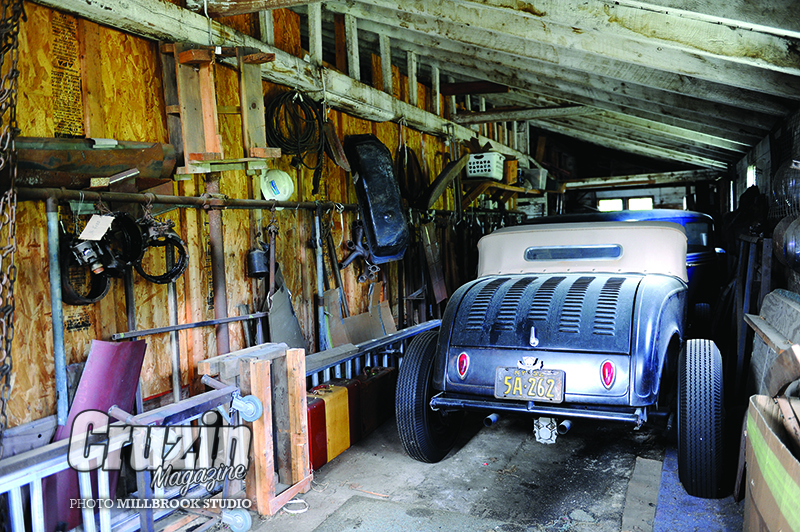
At this point both my head and Ken’s are swimming with dates, cars, people and places. He leans over to me and grins… “I’m old, you know!” He then does a mental recap of the past decade and our conversation and quickly summarises where we are up to.
“We go to Father’s Day in LA, meet Peter, do the photoshoot at El Mirage with no numbers, Bonneville timing tags… numbers, start building the roadster as a dual-purpose car and commit to go back to Father’s Day because of all the friends that we met. The fourth year, the roadster was done, and we were going to race it. Bruce Meyer wanted us to build him a car, then pulls out. We met Varni, and two weeks later he’s in the shop. We were taking him back to the airport when he called Bruce. ‘Hi, it’s Dennis… I’m at the Rolling Bones Hot Rod Shop, and now you’ve got to wait in line because they are going to be making a lot of cars.’”
“We build his car, and now it’s the fourth year, and Peter flies out to do the trip. We have the roadster, Dennis’s car and our coupes. The following year, Keith and I went back to Father’s Day and Bonneville; we never stopped going to Bonneville, and the following year Peter flew out with his wife and met us in Denver. We trailered the roadster cause nobody wanted to drive it until Denver, where Peter drove my coupe, and I drove the roadster. After the fifth year, it just never stopped!”
“When Bruce Meyer asked us to build him a car, we took it seriously and came home and sourced out a ‘32 body for about 23 grand, and we called him up. I was making good money painting pictures and Keith had a good job, so we said, ‘Why don’t we get a couple of our friends and do it together… it won’t take that long!’ There was the guy doing the chassis, and I invited another guy to come in. Our cars were sensational around the world. I wasn’t interested in building cars; I was happy painting pictures, but I also loved hot rods. I didn’t care if nobody knew who built them; I was trying to help this guy out. I don’t hunger for pats on the back, but he didn’t want to (build the car).”
“I was going to do a business plan and coordinate the build and work on the car too… but when I could. They were more hands-on guys, and one was a full-time body guy. We were going to pay him twice as much as he was on, but he didn’t want to take directions and backed out within a day or two. This left me, Keith and Dave, who helped build Dennis’s car; he’s a skilled guy but more into street rods. He went on the trip with Peter Vincent, and we drove a 1928 four-door Nash sedan, and he couldn’t understand why Peter spent so much time in Monument Valley taking pictures of our cars and not his. He wanted to know what was in it for him. The trip was about those cars; if you’re not in the program and you’re pretending… you’re not going to get along with me at all. He and I had a lot of friction. If you’re in, you’re in… if not, you’re out! So he left.”
“We hired a kid out of WyoTech (formerly known as Wyoming Technical Institute), but he was immature and did some dumb things. He worked for us a couple of years and made pretty good money, but he wanted a raise… I said Don’t even ask. He decided to leave, and I told him it was a one-way door. Then Matt (Ken’s son) joined us and has been part of the shop for about nine years now. Since then, I can’t remember any time any of us got mad, screamed, yelled, or went home pissed off. It’s a perfect chemistry now. I’m like the Shepard; I deal with people.”
“I would have art open house nights at my home, and people would come from all over the country. A couple of hundred people would come. I have adapted the same business formula that I developed with my art. Just like I painted pictures I wanted to paint or houses I wanted to build, we build cars we want, and people can take them or not at all. But we are going to be extremely fair.”
“My brother and I would sit down and talk about business for hours. He had a 10-year waiting list for his knives. There was one show where he required knives for sale. He invited ten knife makers from around the world for a three-hour show. Each maker had five knives in front of them, with a box in front of each knife. You had an hour to put your name in the box; at the end of the hour, they would draw a name out of the box. If your name came out, you were entitled to buy the knife. Everyone who went put their name in the box, knowing that if they bought his knife, they could resell it for more money to the guy who missed out. Two of his knives sold for 78 grand, crafted in an old shop with limited tools and limited skills.”
As the evening approaches midnight, I ask Ken for his thoughts on the future of the Rolling Bones and the family of owners who cherish their friendship as much as their cars.
“We have now built 20 cars in around 12 years. Dennis realised how much fun he had having us build his car. We are not sterile like some other shops, and it’s never been about business when a customer comes to the shop. It’s about fun. We never push anything onto them; we guide them like the Race of Gentlemen, where the owners came with us and had fun. Dennis, I think, saw this, and he likes to have fun. He wanted us to be successful, and he had fun helping us.”
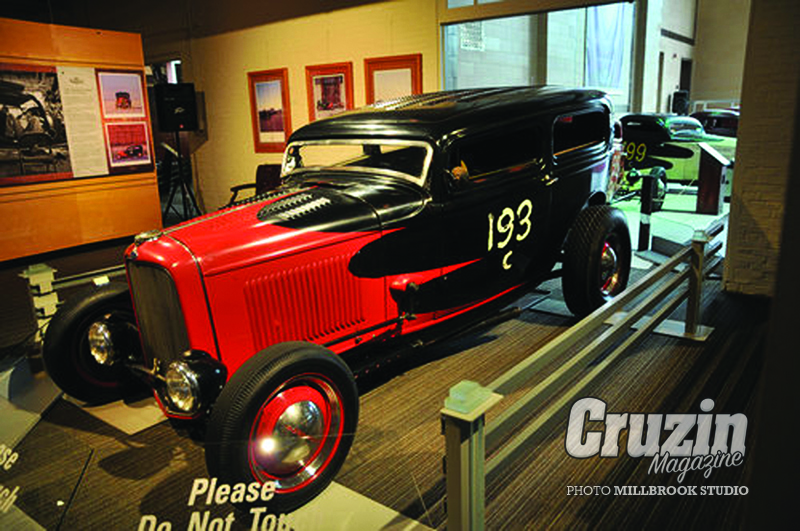
At present, the Rolling Bones Hot Rod Shop is being honoured with an exhibition of 15 Bones-built hot rods at the Saratoga Automobile Museum, which opened on 11 November and continues until March 2017. The extensive display includes full-size dioramas depicting many moments of the Bones way of life, with workshop scenes, Saturday night street drags, El Mirage and Bonneville racing, and even one replicating their roadside breakdown repair service that’s become infamous on their cross-country and Bonneville road trips. I’m glad the workshop wasn’t gutted during my visit, but seeing the incredible collection firsthand would have been very special.
Ken tells me that almost a third of the cars on display are from California, and that he and Keith are working on all the cars to be driven together to Bonneville once freed from their museum duty. Now that would be one journey to remember.
Recently, the immensely talented photographer Peter Vincent released his fabulous book dedicated to the Rolling Bones, a 225-page pictorial of his time spent with these charismatic builders, their cars, road trips, and antics. Peter’s images are second to none, and this book is treasured amongst my own collection. Almost symbiotically, Ken’s own book “The Book of Gow”, the sister book to Peter’s, will have been printed and ready for purchase by the time you read this. His offering is again filled with a mix of incredible images and artwork, complemented by entertaining true stories, yarns and fictitious fun. I was honoured when asked to supply a couple of images from our time together, and if you thought that I couldn’t wait to receive my copy before… it’s now tenfold!
Ken is also working on a “retrospect” gathering of Bones cars in the next year or two that will hopefully bring all their hand-crafted, iconic hot rods together in one place at the same time.
“Retrospect includes the kind of cars that are in the build or waiting. We are always trying to do different cars. Like we haven’t done a ‘34 Tudor or a Vicky, but we are doing a ’34 now. You have to have the right customer. We are also using a new torsion bar front-end design but will retain our style.”
In the crisp light of day, the surreal, tree-studded surroundings of the family homes are rattled as Ken fires the un-muffled Y-block to life, and it’s a quick trip back to the workshop for my last day to soak in the Bones way of life. Cool cars and great people creating works of art with limited tools and limited skills, driven by passion for the purity of hot rods with soul and killer good looks. If this is their dream, they live it to the fullest, one old Ford at a time.